
The USCGC Polar Star Rescues Australian Cruise Ship in Antarctica
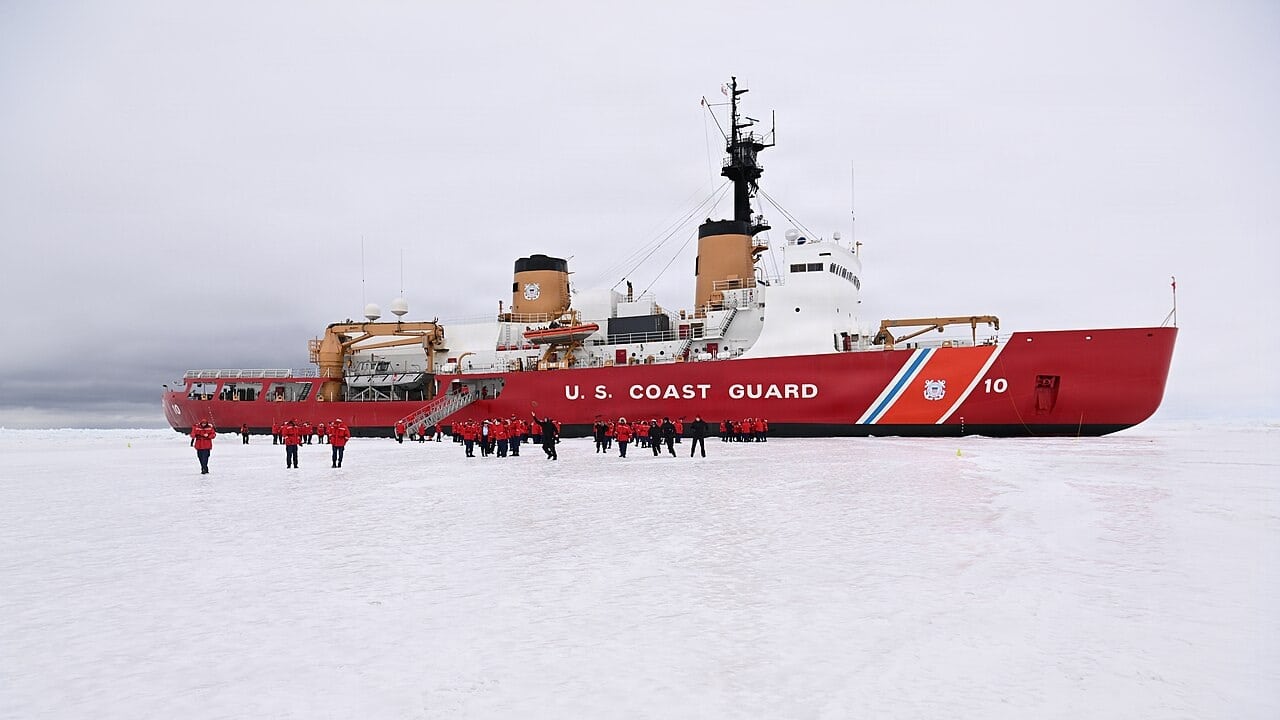
On January 17, 2023, the USCGC Polar Star successfully freed the Australian luxury cruise ship Scenic Eclipse II from icy waters near Antarctica. This operation coincided with the 50th anniversary of the Polar Star’s commissioning into the U.S. Coast Guard. The Scenic Eclipse II became trapped in the Ross Sea, close to McMurdo Sound, while sailing during Antarctica’s summer season, a time when many cruise ships navigate the region.
The rescue unfolded within hours of the ship becoming stuck. Passengers aboard the Scenic Eclipse II were initially left in a precarious situation, surrounded by freezing temperatures and ice. Fortunately, the US Coast Guard icebreaker, Polar Star, was nearby and quickly responded. As the icebreaker maneuvered to clear a path, passengers observed the operation from the ship’s observation deck, sipping champagne as they awaited their release.
The Polar Star, which had departed Seattle on Thanksgiving Day, was on its 29th deployment to Antarctica as part of Operation Deep Freeze. This mission is crucial for maintaining supply lines to U.S. Antarctic bases, ensuring that essential resources reach research stations in the region. After successfully freeing the Scenic Eclipse II, the Polar Star escorted the vessel to open water.
Polar Star’s Role in Antarctic Operations
The Polar Star’s mission extends beyond rescuing stranded vessels; it plays a vital role in supporting U.S. operations in Antarctica. Since its commissioning on January 17, 1976, the icebreaker has been instrumental in maintaining access for fuel and supply ships through the Ross Sea. This access is essential for resupplying U.S. Antarctic bases, which rely on regular deliveries of fuel and cargo.
Capt. Jeff Rasnake, commanding officer of the Polar Star, praised the crew’s dedication and enthusiasm, highlighting their commitment to overcoming challenges during missions. The icebreaker is equipped to create navigable channels through dense Antarctic ice, facilitating the delivery of supplies critical for sustaining research operations.
The Polar Star’s contributions to U.S. Antarctic missions date back to the first Operation Deep Freeze in 1955-56. The operation has evolved to encompass various support activities, including resupply missions and environmental protection efforts. Cmdr. Samuel Blase, the Polar Star’s executive officer, emphasized the ship’s ongoing capabilities, stating that it remains the world’s most capable non-nuclear icebreaker, with many years of service ahead.
Specifications of the USCGC Polar Star
The USCGC Polar Star boasts impressive specifications that enhance its operational capabilities in extreme conditions. Commissioned in 1976, the icebreaker features a hull constructed from high-strength steel, with 1.75-inch thick plating in critical areas. It measures 399 feet (122 meters) in length and has a beam of 83.5 to 84 feet, with a draft of 34 feet. The ship’s displacement ranges from approximately 13,000 to 13,500 tons when fully loaded.
For propulsion, the Polar Star utilizes a Combined Diesel-Electric and Gas (CODGAG) system, featuring six diesel-electric engines generating 18,000 horsepower and three aviation-grade gas turbines with a total output of 75,000 horsepower. The icebreaker can reach a maximum speed of 18 knots and can continuously navigate through 6-foot thick ice at 3 knots. Its icebreaking capacity allows it to break through 6 feet of ice continuously and up to 21 feet when ramming.
Canada Places Order with Seaspan for Construction of Heavy Polar Icebreaker
With a crew capacity of 140, the Polar Star continues to serve as a critical asset for the U.S. Coast Guard, ensuring safe navigation and support in one of the most challenging environments on Earth.
