
U.S. Military Operation Captures Venezuelan Leader Nicolás Maduro
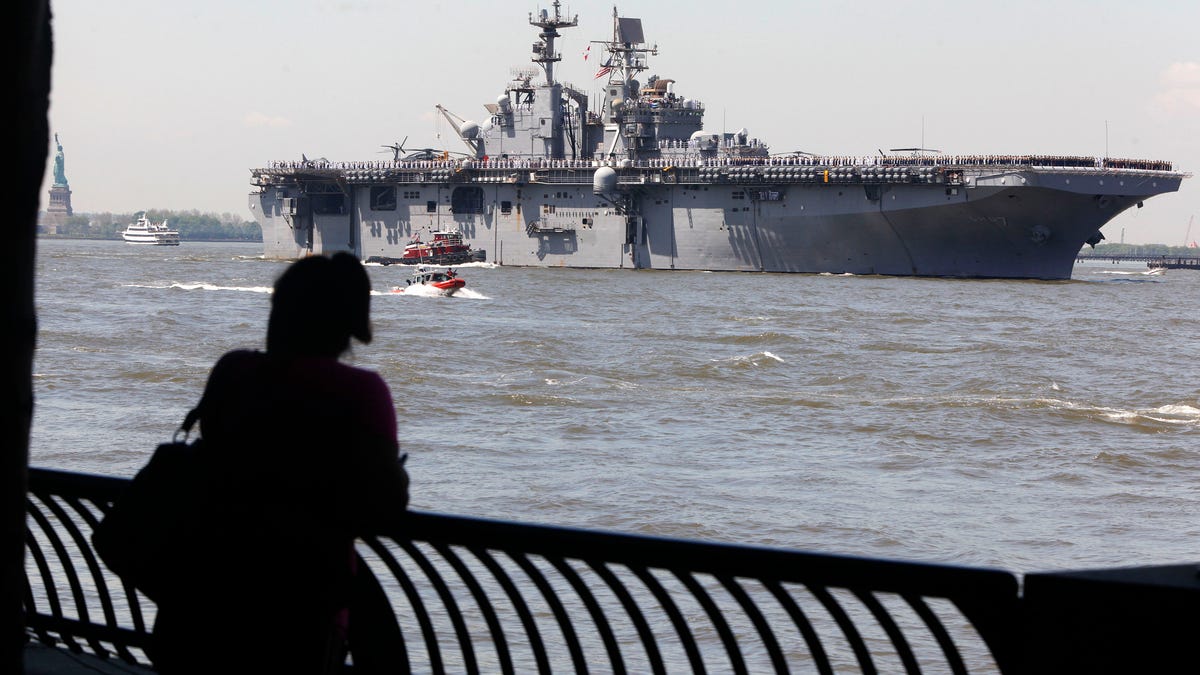
In a dramatic military operation, Venezuelan President Nicolás Maduro has been captured by U.S. forces in Caracas. The raid occurred overnight, leading to Maduro’s subsequent transport to New York, where he faces serious drug trafficking charges. The operation was executed with precision, involving over 150 aircraft coordinated across the Western Hemisphere.
U.S. Attorney General Pam Bondi announced that Maduro is charged with multiple offenses, including Narco-Terrorism Conspiracy and Cocaine Importation Conspiracy. Alongside him, his wife, Cilia Flores, was also captured during the raid. President Donald Trump shared a photo of a blindfolded Maduro aboard the USS Iwo Jima, the amphibious assault ship that played a crucial role in the operation.
Details of the USS Iwo Jima
The USS Iwo Jima (LHD-7) is the third iteration of its class and has been in active service since its commissioning in 2001. Measuring 840 feet in length and 140 feet in width, the ship is designed for launching aircraft and landing Marines. It is equipped to support the Navy’s “vertical envelopment” concept, which enhances amphibious operations by allowing for rapid troop deployment and support.
The ship is homeported in Norfolk, Virginia, and carries a detachment of Marines along with helicopters. The previous version, USS Iwo Jima (LPH-2), served from 1961 to 1993 and was the first ship built specifically as an amphibious assault vessel. It played significant roles in various military operations, including the Vietnam War and the Gulf War.
Historical Context of the USS Iwo Jima
The original USS Iwo Jima (CV-46) was canceled during construction in 1945, but the name was later revived for the LPH-2 and LHD-7 classes. The LPH-2 served as a mobile base for troops and helicopters, participating in numerous military engagements and humanitarian missions. It was also a critical asset during the Cold War, involved in events such as the Cuban Missile Crisis.
In contrast, the LHD-7 features advanced armament capabilities, including missile launchers and automated defense systems. The LPH-2 had more limited armament, reflecting the evolving needs of naval warfare. The USS Iwo Jima continues to be a vital component of the U.S. Navy’s operational readiness and strategic capabilities.
This operation marks a significant moment in U.S.-Venezuelan relations and highlights the complexities of international military operations.
