
U.S. Navy Accelerates Medium Landing Ship Program
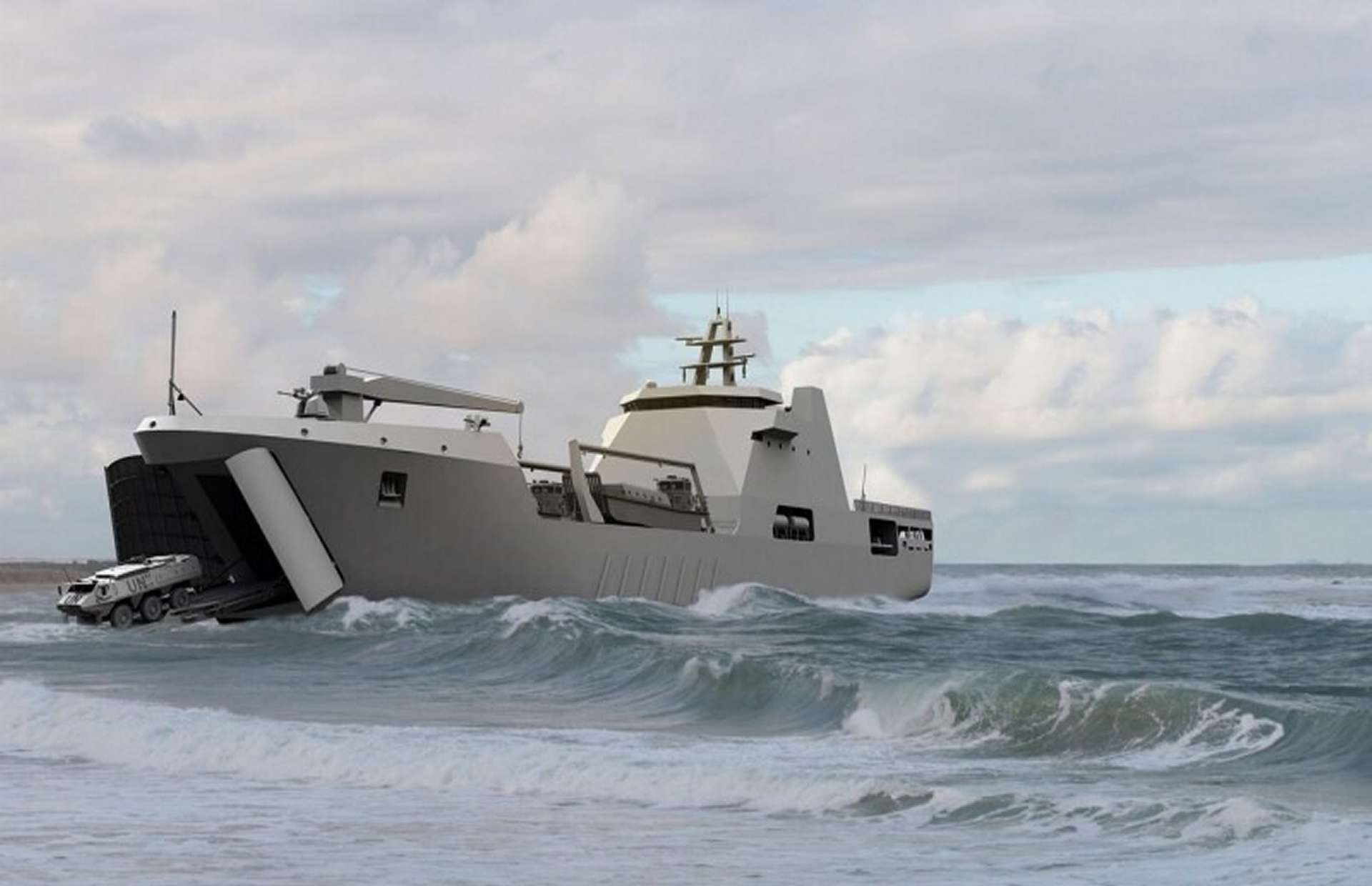
On February 18, 2026, the U.S. Navy took a significant step to expedite its Medium Landing Ship (LSM) program by issuing a Request for Proposal (RFP) for a Vessel Construction Manager (VCM). This initiative aims to enhance the production of a new class of ships designed to support Marine Corps operations in contested coastal areas, particularly in the Indo-Pacific region. The Navy plans to award the contract by mid-2026, emphasizing a commitment to tighter schedules and cost management.
Strategic Shift in Shipbuilding
The U.S. Navy’s Naval Sea Systems Command (NAVSEA) is focused on accelerating the LSM program by appointing a Vessel Construction Manager to oversee the construction process across multiple shipyards. The selected VCM will be responsible for managing subcontracts and ensuring efficient production of the new class of ships. This decision reflects a strategic shift aimed at compressing timelines and expanding the shipbuilding industrial base, which is crucial for the Navy-Marine Corps team operating in contested littoral zones.
The LSM is designed to transport Marines and their equipment in environments where traditional large amphibious ships are vulnerable. The program is based on a proven design derived from Damen Naval’s Landing Ship Transport 100 (LST 100), which was selected as the baseline in December 2025. This mature design approach aims to avoid the pitfalls of cost overruns and schedule delays that have plagued previous naval projects. The LST 100 features a length of 100 meters, a beam of 16 meters, and a draft of approximately 3.5 to 3.85 meters, with a speed of 15 knots and a range exceeding 4,000 nautical miles.
One of the key operational advantages of the LSM is its roll-on/roll-off capability, which includes a spacious cargo deck and ramps designed for efficient loading and unloading. This design allows for the transport of vehicles and supplies without relying on fixed port infrastructure, making it ideal for rapid deployment in dynamic environments. The LSM is expected to play a vital role in supporting Marine Littoral Regiments by facilitating logistics and enabling the movement of essential equipment and personnel.
Future Outlook and Industry Implications
The Navy’s approach to the LSM program emphasizes the importance of operational tempo and effective contracting strategies. By engaging multiple shipyards and employing a mature design, the VCM is expected to streamline production and enhance the industrial base. This model not only aims to deliver ships on time and within budget but also to provide the Navy with a versatile platform that can adapt to various operational scenarios.
As the VCM competition unfolds, proposals are due in early April, with NAVSEA targeting a mid-2026 award. The timeline for construction is ambitious, with the first ship expected to be delivered by 2029. This urgency reflects the Navy’s recognition of the strategic importance of maintaining a robust presence in the Indo-Pacific region. The LSM program is not merely about increasing the number of ships; it is about enhancing the Navy’s operational capabilities and ensuring that Marines can effectively maneuver in contested environments.
