
U.S. Navy Expands Fleet with New Autonomous Liberty Class
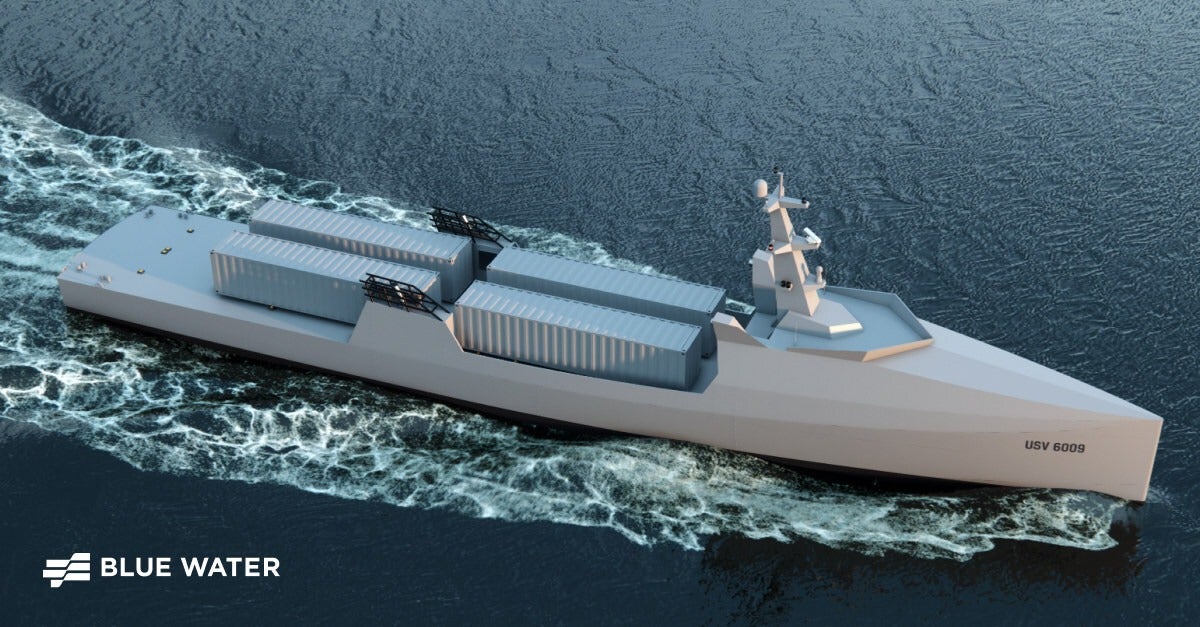
In a significant move to enhance its naval capabilities, the U.S. Navy is set to welcome the Liberty class, an innovative autonomous vessel developed by Blue Water Autonomy. This Boston-based technology and shipbuilding company has designed the Liberty class in collaboration with Damen, a Dutch shipbuilding firm, drawing inspiration from the iconic World War II Liberty Ships. The new vessels aim to meet urgent national defense needs while ensuring operational efficiency.
Innovative Design and Capabilities
The Liberty class is a 60-meter steel vessel boasting a payload capacity of over 150 tonnes and an impressive operational range of 10,000 nautical miles. Its design is based on the Stan Patrol 6009, featuring a unique Axe Bow that enhances performance by allowing the ship to slice through waves with minimal slamming. This hull shape not only improves seakeeping characteristics but also retains payload capacity, making it a reliable choice for various missions, including missile deployment, sensor operations, and logistics support.
Rylan Hamilton, CEO of Blue Water Autonomy, emphasized the vessel’s focus on autonomous operations. “The Liberty class reflects our commitment to building ships designed for long-duration missions and rapid production,” he stated. By leveraging a proven hull design and re-engineering it for unmanned operations, Blue Water aims to deliver vessels capable of extended missions without crew, aligning with the Navy’s urgent production needs. This approach represents a modern interpretation of the historical practice of quickly building capable ships at scale.
Blue Water Autonomy Launches Revolutionary Liberty Class Vessel
Production Timeline and Future Plans
Construction of the Liberty class vessels is slated to commence at Conrad Shipyard in March 2026. With a robust workforce of 1,100 employees, Conrad Shipyard is well-equipped to produce over 30 ships annually. The first Liberty class vessel is expected to be completed later this year as part of a record program for the U.S. Navy. Following the delivery of this initial ship, Blue Water plans to ramp up production, aiming to manufacture between ten to twenty vessels each year to support the Navy’s expanding fleet.
