
Urgent Rescue Operations Underway After Cargo Ship Sinks
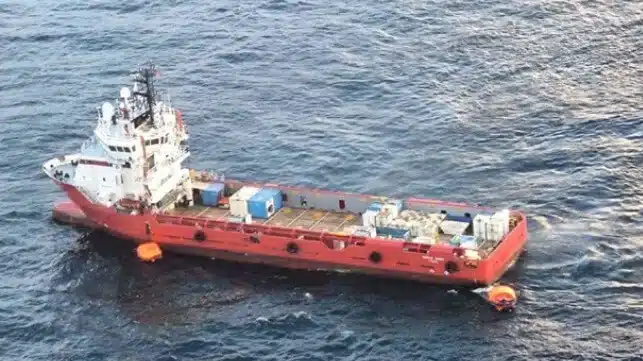
BEIJING, Jan 23 (Reuters) – Rescue operations have been launched by China and the Philippines following the sinking of a cargo ship near Scarborough Shoal, a highly disputed area in the South China Sea. The vessel, carrying 21 crew members from the Philippines, capsized early Friday morning, prompting immediate search and rescue efforts from both nations.
Details of the Incident
According to reports, the Chinese military confirmed that 17 crew members were rescued, although two later succumbed to their injuries. The distress signal was received around 1:30 a.m. local time, indicating that a foreign cargo vessel had capsized in the waters near Scarborough Shoal. In response, the Chinese military dispatched aircraft and the Chinese Coast Guard sent two vessels to assist in the rescue operations.
One crew member is currently receiving emergency medical treatment, and China’s maritime authorities are coordinating additional rescue forces to the area. The Philippine Coast Guard (PCG) also mobilized two vessels and two aircraft to aid in the rescue of the Filipino crew from the Singaporean-flagged cargo ship, identified as the Devon Bay, which was transporting iron ore to Yangjiang, a city in southern China.
The PCG Command Center reported that information from the Hong Kong Maritime Rescue Coordination Centre indicated that a passing China Coast Guard vessel had rescued 10 of the 21 Filipino crew members. Meanwhile, the Maritime and Port Authority of Singapore confirmed the sinking of the Devon Bay and stated that they are in contact with the ship’s owner and relevant authorities to provide necessary support and investigate the incident.
Context of the Dispute
The Scarborough Shoal has long been a flashpoint in territorial disputes between China and the Philippines, with both nations claiming sovereignty over the area. China has maintained control over the shoal since a standoff in 2012, stationing its coast guard and fishing vessels there. Tensions escalated recently when China accused a Philippine government aircraft of “illegally intruding” into the airspace over the shoal.
A 2016 ruling by the Permanent Court of Arbitration in The Hague invalidated China’s extensive claims in the South China Sea, declaring its blockade illegal and affirming the shoal as a traditional fishing ground for countries like the Philippines and Vietnam. However, China has rejected this ruling, and its claims overlap with the exclusive economic zones of several Southeast Asian nations, including Brunei, Indonesia, Malaysia, and Vietnam.
As rescue efforts continue, the situation remains critical, with both nations working to ensure the safety of the crew members involved in this maritime incident.
