
US Navy Launches Final Spearhead-Class Vessel
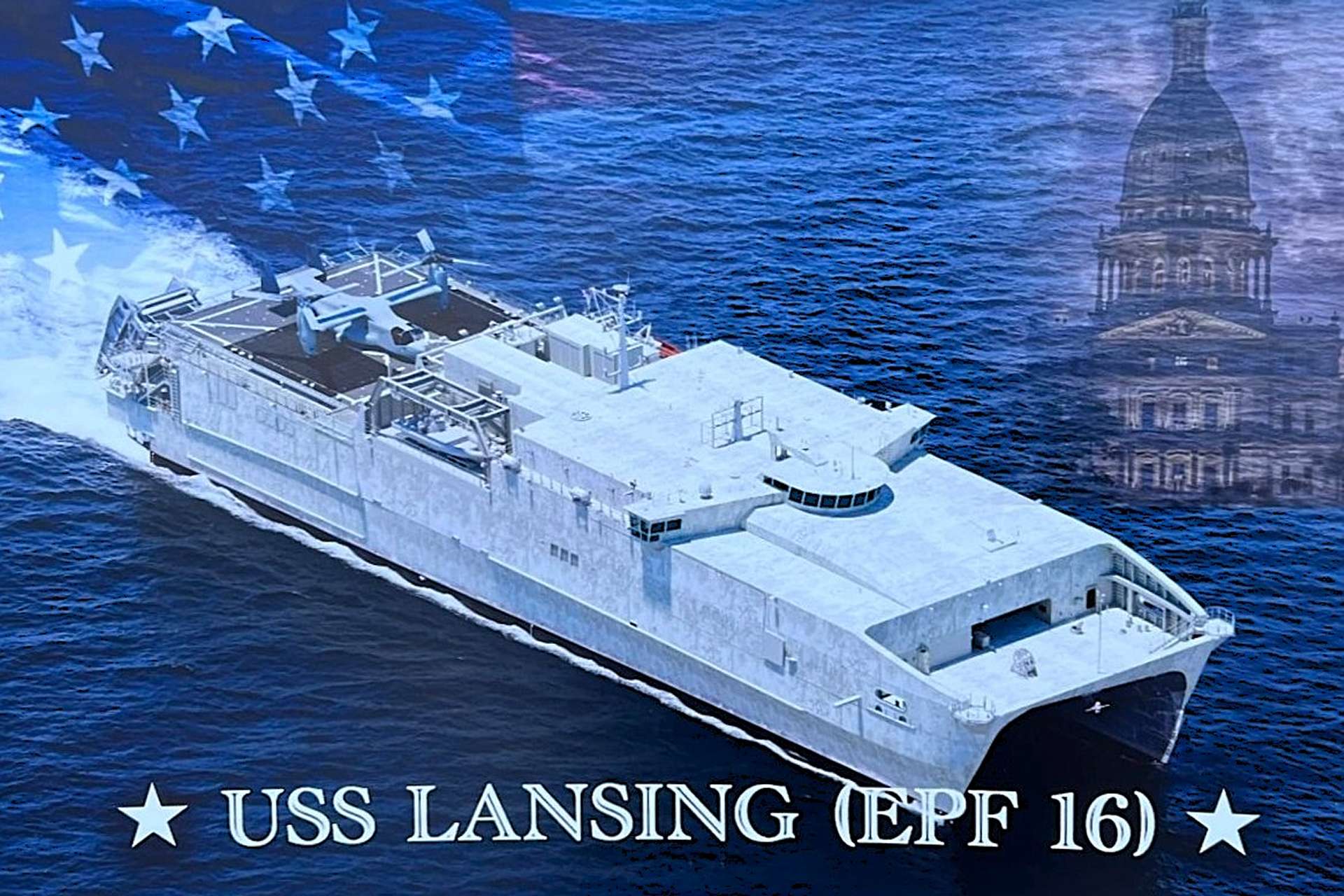
On January 10, 2026, the U.S. Navy officially christened the USNS Lansing (EPF 16) at Austal USA’s shipyard in Mobile, Alabama. This significant event marks the completion of the Spearhead-class line, emphasizing the Navy’s commitment to enhancing rapid sealift and medical support capabilities amid increasing logistical challenges in the Indo-Pacific and Europe. The christening ceremony, attended by notable figures, highlights the U.S. strategy to maintain agile naval operations in contested regions.
USNS Lansing: A New Era in Naval Logistics
The USNS Lansing is the sixteenth and final vessel in the Spearhead-class of expeditionary fast transports, designed to provide high-speed, shallow-draft capabilities for moving troops, equipment, and medical support in contested maritime environments. Built on an aluminum catamaran hull, the ship measures approximately 103 meters in length and 28.5 meters in width, with a shallow draft of nearly 3.8 meters. This design allows the Lansing to access ports and coastal areas that are inaccessible to larger combat vessels.
Equipped with four MTU 20V8000 diesel engines, the Lansing can achieve speeds exceeding 35 knots, with potential bursts approaching 40 knots under favorable conditions. One of its standout features is a reconfigurable mission bay of about 20,000 square feet, capable of transporting vehicles, containers, and palletized cargo. The ship also includes a flight deck that can accommodate large helicopters and tiltrotor aircraft, enhancing its operational versatility.
The Flight II configuration of the Lansing introduces advanced medical facilities and aviation capabilities, albeit with a reduced cargo capacity of approximately 330 short tons. This design prioritizes enhanced medical support and additional berthing spaces, making the ship a vital asset for rapid response in crisis situations. The Lansing is designed to operate with a core crew of civilian mariners, while also accommodating mission-specific detachments of up to 155 personnel, including full expeditionary medical teams. This flexibility allows the ship to function as a high-speed connector, a forward medical node, or a mobile casualty evacuation platform, particularly in areas lacking fixed medical infrastructure.
Strategic Implications and Future Prospects
The christening of the USNS Lansing not only signifies the completion of the Spearhead-class production line but also reflects the U.S. Navy’s evolving approach to logistics and support operations. The ship’s capabilities are particularly relevant in the current geopolitical climate, where U.S. military strategies in the Indo-Pacific and Europe emphasize the need for rapid deployment and sustained operations in contested environments.
As the U.S. Navy continues to adapt to emerging threats, the Lansing and its Flight II counterparts will play a crucial role in executing concepts such as Expeditionary Advanced Base Operations and distributed maritime operations. These strategies rely on the ability to sustain small, dispersed units across challenging terrains while complicating adversary targeting efforts.
Moreover, the addition of the USNS Lansing enhances the operational flexibility of the Military Sealift Command, which has been heavily engaged in recent years. The ship’s capabilities will support a range of missions, from humanitarian assistance to crisis response, reinforcing the U.S. commitment to maintaining a robust naval presence globally. As the Navy looks to the future, the successful integration of the Lansing into its fleet will provide valuable insights for the development of next-generation support vessels.
Austal USA Launches First Steel Ship Marking Expansion from Aluminum
The christening ceremony, attended by Michigan Governor Gretchen Whitmer and Congresswoman Lisa McClain, symbolically connects the ship to the industrial heritage of Lansing, Michigan, a city known for its manufacturing contributions to U.S. military efforts. This connection underscores the importance of a nationwide industrial base in sustaining American maritime power.
