
USCGC Polar Star Rescues Stuck Cruise Ship
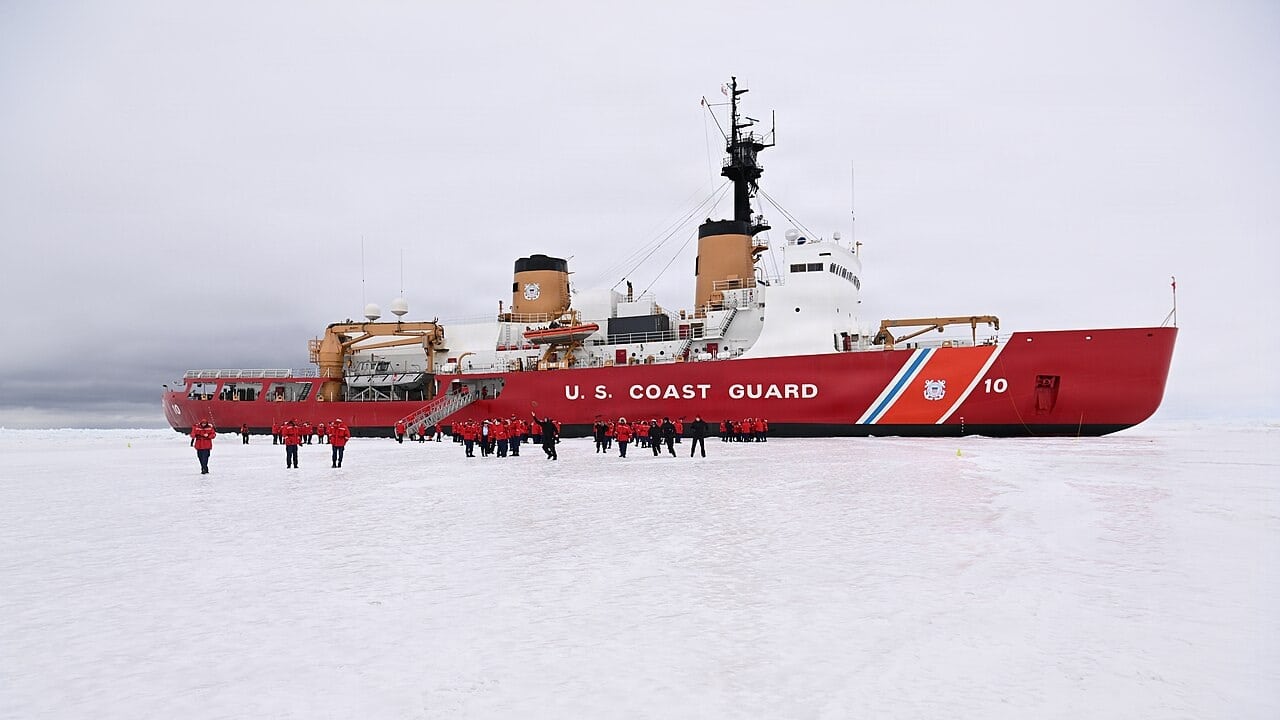
On January 17, the USCGC Polar Star successfully freed the Australian luxury cruise ship Scenic Eclipse II, which had become trapped in ice off the coast of Antarctica. This operation coincided with the 50th anniversary of the Polar Star’s commissioning into the Coast Guard. The rescue, which took place in the typically navigable waters of the Ross Sea, showcased the icebreaker’s critical role in supporting Antarctic operations.
Rescue Operation in Antarctica
The Scenic Eclipse II was sailing near McMurdo Sound when it encountered heavy ice, leaving its passengers and crew stranded in freezing temperatures. Fortunately, the US Coast Guard icebreaker Polar Star was nearby and able to respond swiftly. After a few hours of waiting, the passengers watched from the observation deck as the Polar Star cleared the ice around their vessel, allowing it to navigate back to open water. Many passengers celebrated the rescue with champagne, relieved to be free from their icy predicament.
The Polar Star, which had embarked on its 29th deployment to Antarctica on Thanksgiving Day, played a vital role in this operation as part of Operation Deep Freeze. This mission, which began in 1955, encompasses various U.S. operations in Antarctica, including essential resupply missions to support research stations like McMurdo Station. The Coast Guard’s efforts ensure that vital supplies reach these remote locations, maintaining the functionality of U.S. Antarctic operations.
Polar Star’s Legacy and Specifications
The rescue of the Scenic Eclipse II marked a significant milestone for the Polar Star, as it occurred on the 50th anniversary of the icebreaker’s commissioning on January 17, 1976. While the Polar Star’s primary mission is to facilitate supply deliveries to U.S. Antarctic bases, it has also been involved in numerous search-and-rescue operations over the decades. Captain Jeff Rasnake, the commanding officer of the Polar Star, praised the crew’s dedication and resilience in overcoming the challenges of their mission.
As the world’s most capable non-nuclear icebreaker, the Polar Star continues to operate effectively in extreme conditions. Its specifications include a length of 399 feet, a beam of 83.5 feet, and a draft of 34 feet. The vessel is powered by a combination of diesel-electric engines and gas turbines, enabling it to break through thick ice. With a crew capacity of 140, the Polar Star remains an essential asset for U.S. operations in the harsh Antarctic environment.
