
USS John F. Kennedy (CVN-79) Begins Manufacturer Sea Trials
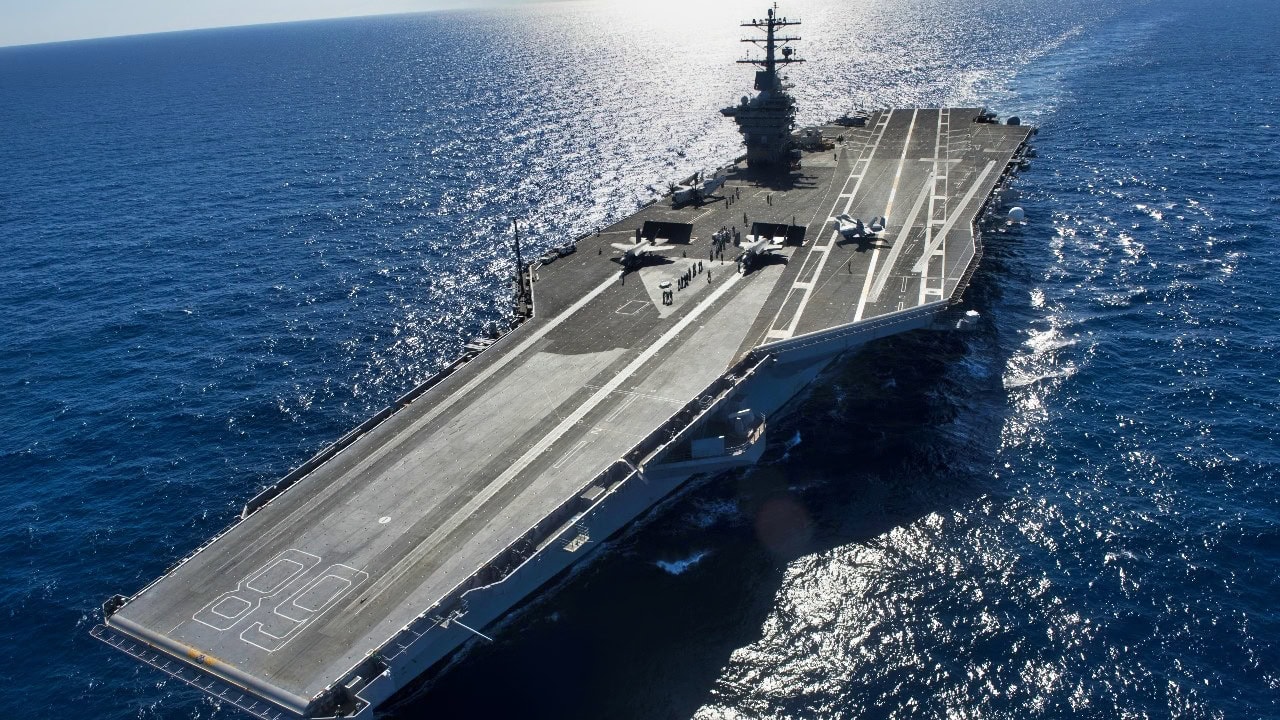
The USS John F. Kennedy (CVN-79), the second supercarrier of the Gerald R. Ford class, has officially commenced its manufacturer sea trials. This significant milestone took place on January 28, 2026, as the carrier set sail from Newport News, Virginia. The trials are a crucial step toward the vessel’s delivery to the U.S. Navy, which is scheduled for March 2027. During these initial tests, specialized personnel from Huntington Ingalls Industries (HII) will closely monitor the performance of the carrier’s major systems and components.
The importance of this development cannot be overstated. The U.S. Navy faces challenges with carrier availability, as only a limited number of vessels can be deployed at any given time. According to the Navy’s “rule of thirds,” one-third of the fleet is typically deployed, another third is preparing for deployment, and the remaining third is undergoing maintenance. With only 11 carriers in the fleet, this means that only three to four are usually operational at sea. The addition of CVN-79 will help alleviate the strain on existing carriers, which are often stretched thin due to maintenance and repair needs.
Significance of the USS John F. Kennedy’s Trials
The USS John F. Kennedy’s sea trials mark a pivotal moment for the U.S. Navy, as it is the second Ford-class carrier to begin this phase. The first, the USS Gerald R. Ford (CVN-78), began its sea trials in 2017. The Kennedy’s journey to this point has been lengthy; it was laid down in 2015, and the gap between its construction and sea trials is longer than that of its predecessor.
Nuclear-powered supercarriers like the Kennedy are essential to maintaining a robust naval presence. They require extensive maintenance, including refueling and complex overhauls (RCOH) every 25 years. This process can sideline a carrier for years, complicating operational logistics. For instance, the USS George Washington (CVN-73) was out of action for over 2,100 days during its RCOH. Such lengthy downtimes highlight the necessity of having additional carriers like the Kennedy to ensure that the Navy can respond effectively to global threats.
The Kennedy is designed to carry approximately 90 aircraft, including fixed-wing and helicopters, and features advanced systems such as the Electromagnetic Aircraft Launch System (EMALS). Its operational capabilities will enhance the Navy’s ability to project power and respond to crises worldwide.
Comparative Overview: Old vs. New Supercarriers
The original USS John F. Kennedy (CV-67) was the last conventionally powered aircraft carrier in the U.S. Navy, commissioned in 1968 and decommissioned in 2007. In contrast, the USS John F. Kennedy (CVN-79) represents a significant technological advancement, being nuclear-powered and equipped with modern systems designed for enhanced operational efficiency.
The specifications of the two carriers illustrate this evolution. The CV-67 had a displacement of approximately 82,655 tons and a crew complement of about 5,600 personnel. In comparison, the CVN-79 has a displacement of around 100,000 tons and can accommodate a crew of approximately 4,297, including officers and enlisted personnel. The new carrier also boasts a flight deck width of 252 feet, compared to the CV-67’s 130 feet, allowing for more aircraft operations.
As the USS John F. Kennedy progresses through its sea trials, it brings the U.S. Navy closer to bolstering its fleet and enhancing its operational readiness. The trials are not just a test of the ship’s capabilities but a step toward ensuring that the Navy can maintain its global presence and respond effectively to emerging threats.
