
WinGD Achieves Major Milestone with Ammonia-Fueled Engine Testing
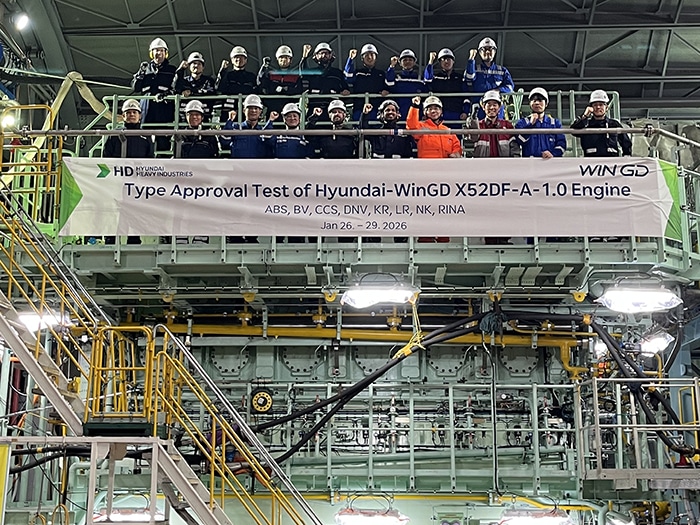
Swiss engine developer WinGD has reached a significant milestone by completing Type Approval Testing (TAT) and Factory Acceptance Testing (FAT) for its innovative 52-centimeter bore ammonia-fueled X52DF-A-1.0 two-stroke engine. This engine is set to be installed on a 46,000 cubic meter LPG/ammonia carrier currently on order for EXMAR. The successful completion of these tests marks a pivotal step in the shipping industry’s efforts to decarbonize and transition to more sustainable fuel sources.
The testing programs were conducted in January 2026 at the HD Hyundai Heavy Industries’ Engine & Machinery (HHI-EMD) facility in South Korea. The tests were overseen by classification society Lloyd’s Register (LR) and included representatives from all major classification societies, ensuring a comprehensive evaluation of the engine’s capabilities. The vessels utilizing this engine will be the first ammonia-fueled gas carriers to enter commercial service, highlighting a significant advancement in marine fuel technology.
Engine Features and Future Trials
The X-DF-A engine is designed with high-pressure ammonia injection, complemented by a low pilot fuel dose of approximately five percent at full load. This design allows the engine to deliver performance metrics comparable to WinGD’s diesel-fueled X-engines, whether operating on ammonia or diesel. Kristof Coppé, director of fleet operations and technical business development at EXMAR, emphasized the importance of these tests in advancing ammonia as a viable marine fuel. He noted that EXMAR has leveraged over 40 years of experience in ammonia transportation to inform both engine design and testing, particularly regarding safety considerations unique to ammonia fuel.
Looking ahead, preparations for sea trials are already underway. These trials will validate the ammonia dual fuel engine and all onboard systems in real-world conditions. Coppé stated that these trials are planned for the coming months, marking the next phase in the development of ammonia as a marine fuel.
Sotiris Topaloglou, global head of testing and validation at WinGD, expressed pride in the successful completion of TAT and FAT, describing it as a major technical milestone. He highlighted the challenges faced in developing ammonia-fueled propulsion systems and the importance of safety, control, and system integration. The results from the testing demonstrate that ammonia propulsion can meet the industry’s high standards for reliability and performance.
WinGD wins first approval in principle for ammonia two-stroke engine
Environmental Impact and Industry Confidence
WinGD’s rigorous multi-year development and testing process has yielded impressive results, particularly in emissions performance. The X-DF-A engine has shown nitrogen oxide (NOx) emissions during ammonia operation to be significantly lower than those produced during diesel use. Additionally, emissions of nitrous oxide (N2O) have been recorded at negligible levels, contributing minimally to the overall greenhouse gas emissions footprint.
The growing confidence in ammonia as a future marine fuel is reflected in WinGD’s early order book, which includes approximately 30 X-DF-A engines across various vessel segments, such as gas and bulk carriers, tankers, and container vessels. This momentum indicates a positive shift within the maritime industry as advancements in engine technology, ship design, and operational frameworks continue to evolve in tandem. The successful completion of testing not only showcases WinGD’s manufacturing and testing expertise but also reinforces the potential of ammonia as a sustainable marine fuel option.
