
World’s Largest Battery-Electric Ship Begins Harbor Trials in Hobart
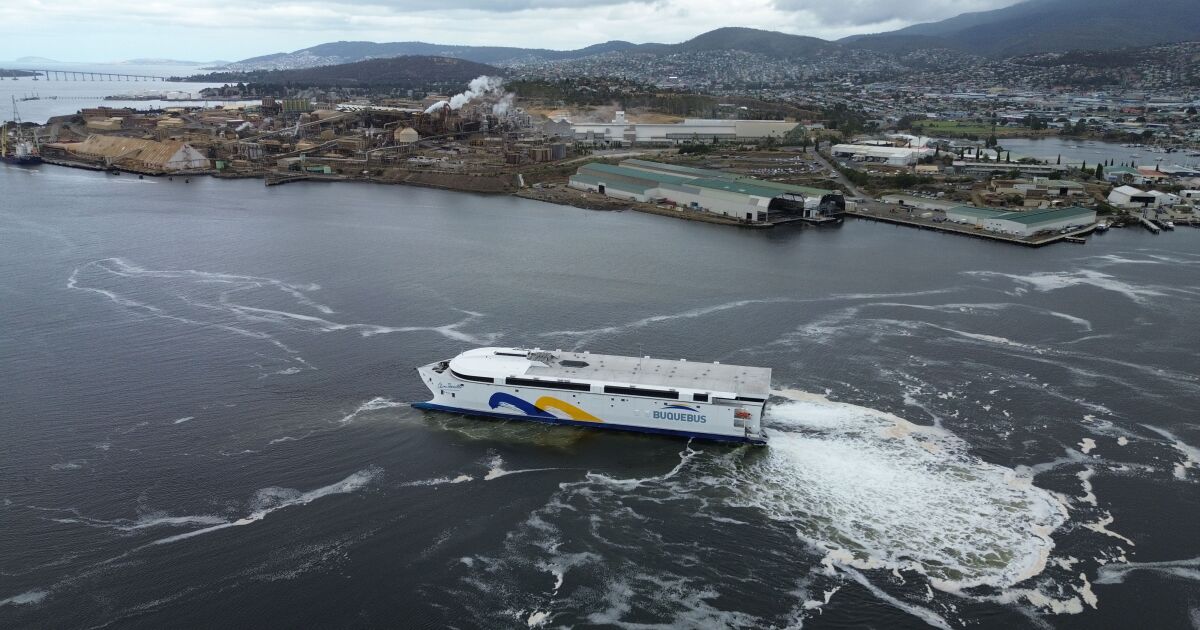
Earlier this month, the River Derwent in Hobart witnessed a significant milestone in maritime innovation as the 130-meter vessel, Hull 096, embarked on its harbor trials. This marks the first time the ship has operated solely on battery-electric propulsion, a groundbreaking achievement for the maritime industry. Developed and constructed by Incat Tasmania, Hull 096 is now officially the world’s largest battery-electric ship, moving under its own power without the noise of engines or exhaust emissions.
This trial is not merely a routine systems check; it represents a pivotal moment in the evolution of large commercial vessels. After years of ambitious design changes and complex construction, Hull 096 has transitioned from concept to reality. The vessel is designed to carry up to 2,100 passengers and over 220 vehicles, positioning it among the largest electric vehicles ever built.
Transition from LNG to Battery Power
Initially, Hull 096 was intended to operate on liquefied natural gas (LNG) for the South American operator Buquebus. However, as development progressed, fluctuating fuel prices and advancements in battery technology prompted a shift in strategy. In 2023, Incat and Buquebus made the decision to convert the vessel to fully electric propulsion, a move that Incat’s chairman, Robert Clifford, described as a significant leap toward the future of large commercial shipping.
The vessel’s construction has been a complex endeavor, with Hull 096 launched in May 2025. It features an unprecedented energy storage system comprising over 250 tonnes of batteries, providing more than 40 MWh of capacity—approximately four times larger than any previous maritime installation. Power is delivered to eight electric waterjets, ensuring efficient propulsion while maintaining a quiet operation.
In December 2025, the project transitioned from construction to testing, with Hull 096 powered up for the first time. A public demonstration in Hobart showcased the ship’s battery-electric propulsion system, marking a successful proof-of-concept. This initial trial focused on validating the integration of various systems, setting the stage for the current harbor trials.
Harbor Trials and Future Prospects
The harbor trials that commenced earlier this month are crucial for assessing Hull 096’s performance in real-world conditions. Crews are evaluating propulsion response, maneuverability, and the functionality of onboard systems. This is the first instance of a vessel of this size operating solely on battery power, a significant step forward for the industry.
Navantia Australia’s design capabilities drive Hobart Class Destroyer Upgrade forward
Following the harbor trials, the ship will undergo sea trials before its eventual delivery to South America. While the trials may seem understated, they represent a critical turning point in large-scale electric shipping. If successful, Hull 096 could redefine expectations for future ferries, both in terms of design and environmental impact.
As the maritime industry moves towards sustainable solutions, Hull 096 stands as a testament to innovation and progress. The trials not only highlight the potential of battery-electric propulsion but also pave the way for a quieter, more efficient future in maritime transport.
