
World’s Largest Medieval Trading Cog Unearthed After Six Centuries
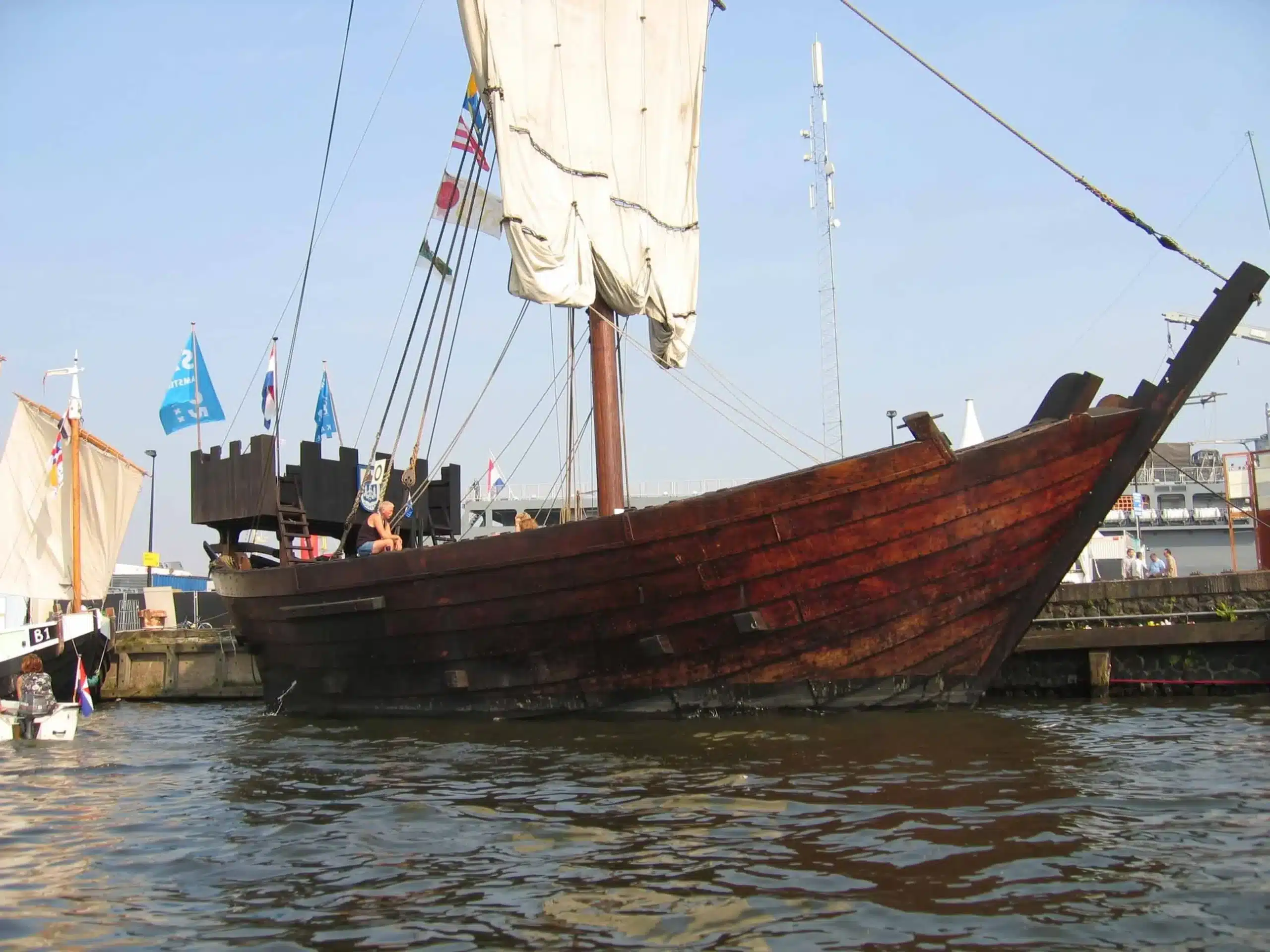
Danish maritime archaeologists have made a groundbreaking discovery of the world’s largest medieval trading cog from the 15th century, submerged underwater for over six centuries. The Viking Ship Museum in Roskilde unveiled this remarkable find, shedding light on ancient seafaring and shipbuilding history.
Maritime archaeologists from the Viking Ship Museum meticulously unearthed the colossal vessel, measuring 28 meters in length, 9 meters in width, and with a cargo capacity of up to 300 tons, making it the largest known cog globally. Dendrochronological analysis revealed its origin in the Netherlands around 1410, constructed with timber from Pomerania and the Netherlands.
The excavation also unveiled remains of a stern castle, showcasing superstructures previously only depicted in iconography. Additionally, the discovery of a brick galley stove, the oldest in Danish waters, hinted at elevated onboard comfort for the crew. The artifacts recovered included bronze cauldrons, tableware, footwear, combs, prayer beads, and food supplies, affirming the vessel’s mercantile purpose.
Experts believe this cog played a pivotal role in the North European trading system of the 15th century, facilitating the transportation of bulk goods like salt, timber, bricks, and food. Its significance lies in enabling the transition from luxury trade to the global circulation of essential commodities, shaping the era’s economic landscape.
The remnants of this historic vessel are currently undergoing preservation at the National Museum of Denmark in Brede, offering a glimpse into the maritime heritage of the late Middle Ages.
