
Urgent Need to Reopen the Strait of Hormuz Amid Ongoing Conflict
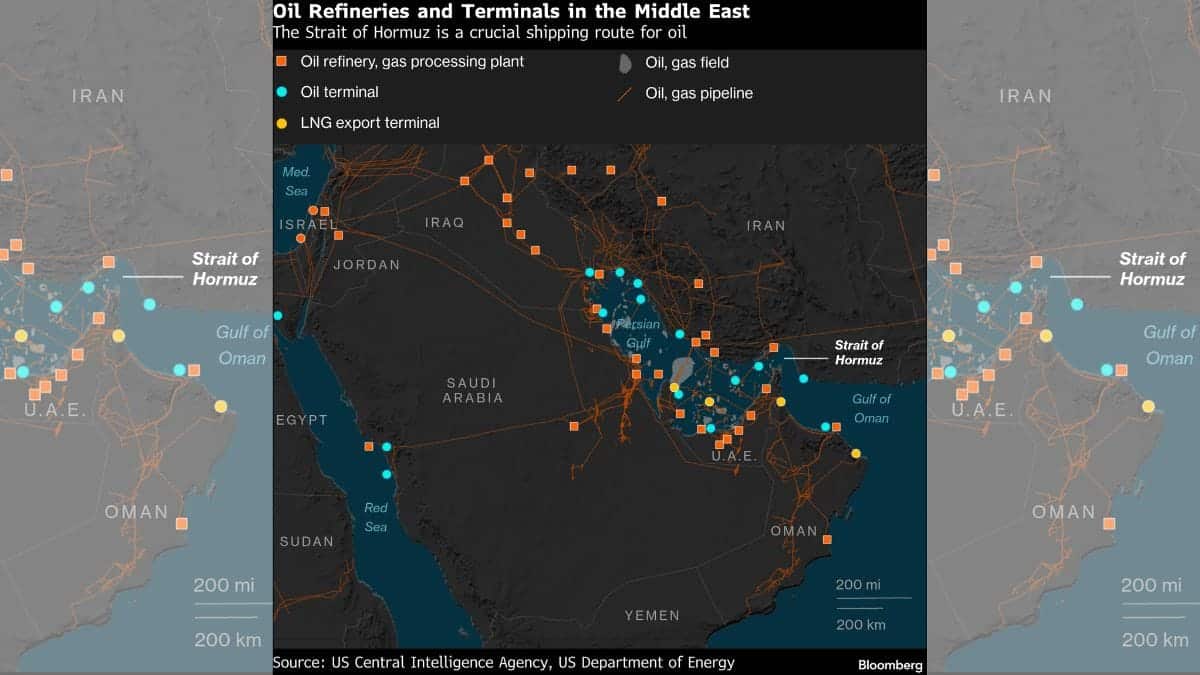
Washington is facing a critical juncture as the Third Gulf War unfolds, with the Pentagon’s ability to reopen the Strait of Hormuz becoming increasingly vital for global oil shipping. The strait, a crucial maritime passage, facilitates the transport of approximately 20% of the world’s crude and refined petroleum products. As of now, four days into the conflict, the strait remains largely closed to large oil tankers, significantly impacting oil supply chains. Only a limited number of smaller vessels have managed to navigate the waters, typically under the cover of night and with their location transponders turned off.
The closure of the strait is not solely due to Iranian claims of its inaccessibility. The U.S. military has advised oil companies and tanker owners to avoid the area as a precautionary measure, leading to widespread compliance within the industry. Concerns about potential Iranian attacks have heightened, although recent strikes on tankers have occurred far from the strait itself. The U.S. Navy has been actively engaged in the region, sinking several Iranian warships, yet the threat of missile and drone attacks from Iran remains a significant concern for tanker traffic.
Impact on Oil Production and Storage Capacity
While the focus is primarily on oil exports, the immediate challenge lies in facilitating the entry of tankers into the Persian Gulf. The region’s storage capacity is limited, and crude production continues unabated. Currently, enough tankers are trapped in the Gulf to accommodate ongoing production, but this situation is unsustainable. Once these vessels reach capacity, countries will have to divert crude to onshore storage facilities, which are also nearing their limits. This could lead to a slowdown in oil production, particularly in Iraq, which appears to be the first country facing storage constraints.
Refineries within the Gulf are also running low on storage, exacerbating the situation. With a significant drop in demand for certain products, such as jet fuel due to reduced airline operations, refiners are at risk of reaching their tank capacity. This could force them to decrease processing rates, further complicating the production and export of crude oil. The urgency to find tankers for crude loading is escalating as the situation develops.
Saudi Arabia and the UAE are exploring alternative routes to bypass the Strait of Hormuz. Both countries have pipelines that can transport crude to the Red Sea and Arabian Sea, respectively. However, these pipelines have limited capacity and can only partially alleviate the situation. Additionally, relocating tankers from outside the strait to these new loading points would take several days.
Future Strategies and Market Reactions
As the situation evolves, oil companies and shipowners are engaging in discussions with the U.S. government to resume tanker traffic. The U.S. may either declare the strait safe for navigation or organize convoys under military escort to facilitate the movement of tankers. Industry insiders indicate that the U.S. recognizes the urgency of the matter, emphasizing the need for action within days rather than weeks. Regional navies are reportedly involved in these discussions, although no definitive decisions have been made yet.
Insurance remains a concern, but it is not the primary issue at hand. Insurers have begun issuing cancellation notices as a standard legal procedure, allowing them to renegotiate contracts at higher rates due to the changing circumstances. If the insurance market cannot provide adequate coverage, the U.S. government may need to step in to support the war premium.
Market reactions to the conflict have been relatively subdued, with Brent crude prices rising from $71 to approximately $84 per barrel. However, if the Strait of Hormuz remains closed for an extended period, oil-producing nations may have no choice but to reduce their output, potentially leading to a significant spike in crude prices. The urgency to reopen this vital shipping lane cannot be overstated, as the global oil market hangs in the balance.
