
Great Lakes Shipping Season Kicks Off with Soo Locks Opening
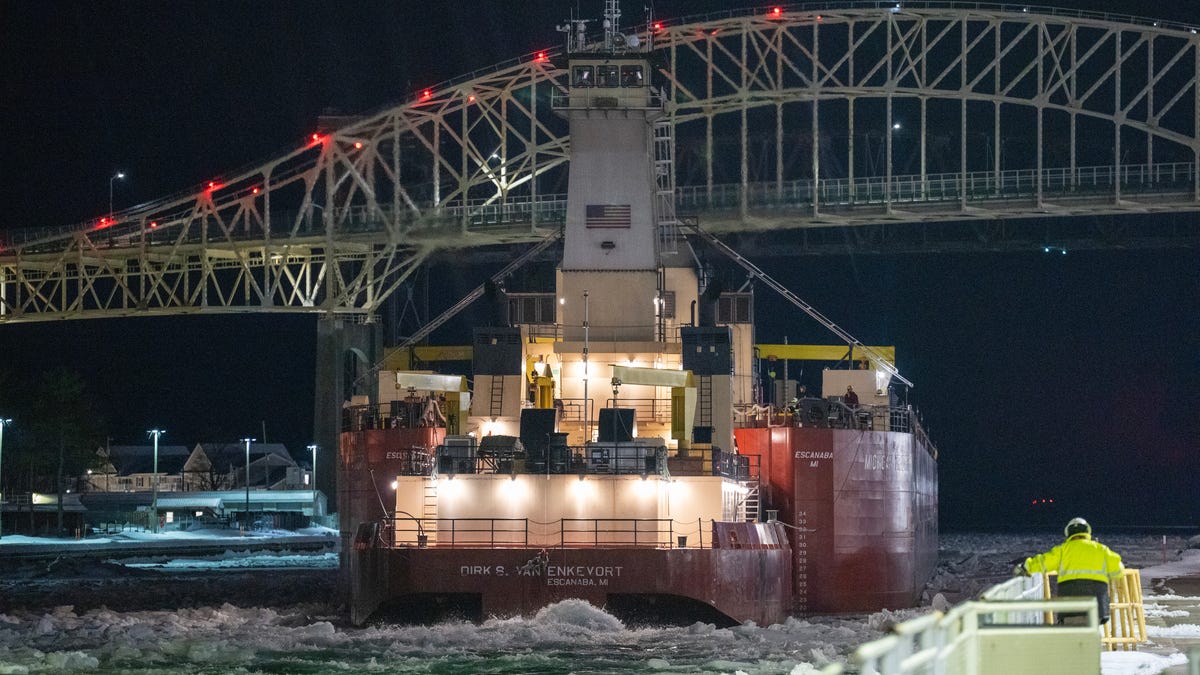
SAULT STE. MARIE, Michigan – The Great Lakes shipping season officially commenced at midnight on March 25, 2026, with the first vessel, the tugboat Dirk S. VanEnkevort, navigating through the Soo Locks. This vital lock system connects Lake Superior with Lakes Michigan and Huron, facilitating the transport of essential cargo, particularly iron ore. The Soo Locks, recognized as the busiest lock system globally by tonnage, play a crucial role in the regional and national economy.
As the Dirk S. VanEnkevort pushed the 740-foot barge Michigan Trader towards Superior, Wisconsin, hundreds of spectators gathered to witness the event. Many more tuned in via social media, marking the opening day of the shipping season as a significant local tradition. Raymond Bell, president of the Soo Locks Visitor Center Association, emphasized the importance of this event for boat enthusiasts, likening it to baseball’s opening day.
The Soo Locks, managed by the U.S. Army Corps of Engineers, undergo a 10-week closure each winter for maintenance. This year, crews removed approximately 90 tons of debris, ensuring the locks were ready for the busy shipping season ahead. The reopening of the locks is not just a logistical milestone; it symbolizes the arrival of spring in the Great Lakes region.
Significance of the Soo Locks in Cargo Transport
The Soo Locks are vital for transporting iron ore, which is primarily sourced from the iron ranges of northeastern Minnesota. Approximately 95% of U.S.-produced iron ore passes through this facility, making it essential for steel production in the lower Great Lakes. The locks facilitate around 7,000 passages annually, moving over 86 million tons of cargo, including coal, stone, and grain products.
The Poe Lock, the largest of the four parallel chambers, accommodates the massive 1,000-foot lakers, while the MacArthur Lock serves smaller vessels. The locks have a rich history, dating back to 1855, when they were constructed to support the mining boom in the region. During World War II, the Soo Locks were heavily guarded, underscoring their strategic importance.
As the shipping season begins, the flow of vessels through the locks is influenced by weather conditions. Ice remains a challenge, often requiring crews to manage ice flow downstream, which can significantly extend lockage times. What typically takes 30 minutes in summer can stretch to six hours in icy conditions, highlighting the skill required by lock operators.
Winter Maintenance and Preparations for the Season
During the winter maintenance period, crews dedicated a significant portion of their time to clearing snow and ice from the locks. This year’s maintenance included a thorough inspection of the lock system, which occurs every five years. Engineers examined every foot of the locks, ensuring structural integrity and performance. The Poe Lock, which will celebrate its 58th anniversary in October, received necessary repairs, including fresh concrete on its jack pads.
As the locks reopened, about 60 million gallons of water were pumped into the Poe Lock from Lake Superior to prepare for the influx of vessels. The first ship’s passage through the locks is a point of pride for the crew, who receive commemorative hats for their achievement. Following the Michigan Trader, other vessels quickly followed, including the Edwin H. Gott and the John G. Munson, both significant bulk carriers.
The reopening of the Soo Locks not only marks the start of the shipping season but also serves as a reminder of the economic importance of maritime transport in the Great Lakes region. As the season progresses, the movement of ships through the locks will continue to be a vital component of the local and national economy.
