
Korean shipbuilders eye FSRU conversions as aging LNG carriers spur demand
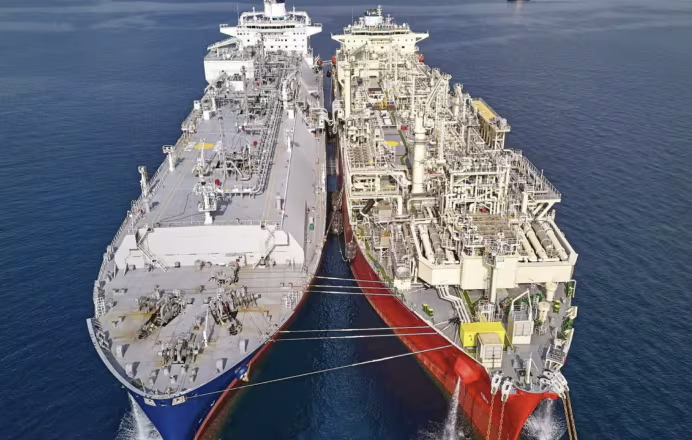
A new trend in the shipbuilding industry is gaining attention with the conversion of aging liquefied natural gas (LNG) carriers into floating storage and regasification units (FSRUs). FSRUs are offshore LNG terminals that store LNG on a vessel and then convert it back to gas for onshore supply.
Growing Interest in FSRU Conversion Projects
According to the shipbuilding industry, HD Hyundai Marine Solution recently completed the main design of an FSRU conversion project it secured in September last year. The company is now actively engaged in the necessary follow-up work to transform an LNG carrier into an FSRU. Similarly, within the Hanwha Group, Hanwha Power has initiated its FSRU conversion business, aiming to convert a 145,000 cubic meter-class LNG carrier into an FSRU. The project is in its final stages and is expected to be finalized within the year.
Market Expansion and Demand Drivers
The FSRU conversion business is gaining momentum due to its short manufacturing timeline. Notably, an FSRU has a quicker construction period compared to an onshore LNG terminal, leading to a smaller initial investment burden. The International Gas Union (IGU) highlights that with the increasing number of LNG-importing countries in Asia, many of these nations do not require large-scale terminals. As a result, the IGU predicts that by 2030, the number of countries importing LNG via FSRUs will expand to 20.
Furthermore, the aging LNG carriers approaching their scrapping timeline have also contributed to the growth of the FSRU conversion market. As these vessels typically have high fuel consumption and low energy efficiency by today’s standards, the demand for FSRU conversions is on the rise. Analysts suggest that converting to an FSRU is more economically viable than scrapping the vessel, leading to an increase in demand for conversions.
Challenges and Opportunities for Korean Shipbuilders
Despite the potential in the FSRU conversion market, Korean shipbuilders face challenges in accumulating orders. Strong order backlogs and limited FSRU order records compared to overseas specialists have hindered Korean shipbuilders from securing conversion projects. However, industry experts believe that as demand for FSRU conversions grows in the mid to long term, domestic shipyards could benefit from increased volume. Building a track record of successful orders is essential for Korean shipbuilders to capitalize on the expanding FSRU conversion market.
In conclusion, the FSRU conversion projects present a promising opportunity for the shipbuilding industry, driven by market dynamics and the need for more efficient LNG supply solutions. As the industry evolves, Korean shipbuilders are poised to tap into this growing market with strategic planning and expertise in FSRU conversions.
