
Alang’s Ship-Breaking Industry Faces Decline
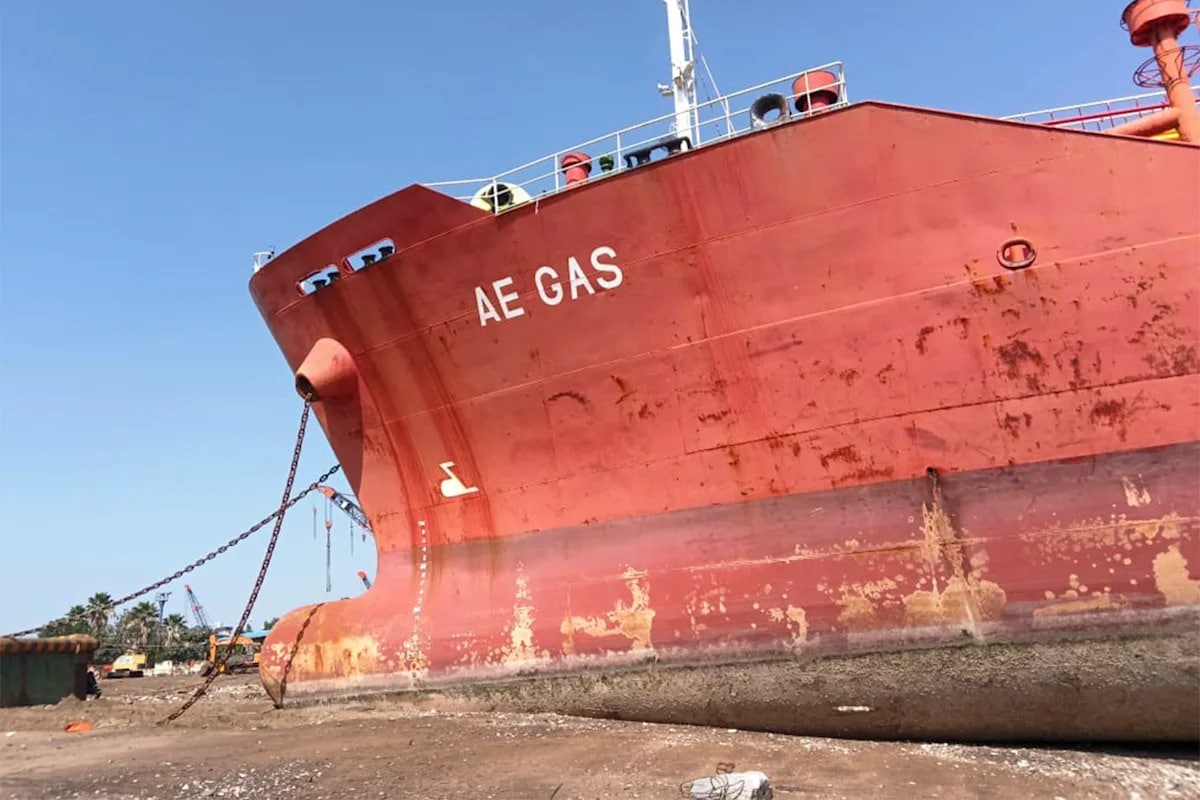
ALANG, INDIA – Once bustling with activity, Alang, the world’s largest ship-breaking yard, is now witnessing a significant decline in operations. Ramakant Singh, a veteran worker at the yard, reflects on the stark contrast from the past, stating, “In the olden days, ships lined up at this yard like buffaloes before a storm. Now, we count the arrivals on our fingers.” The downturn is attributed to a combination of global shipping trends and increased operational costs, leaving many workers and businesses in the region struggling to survive.
Declining Ship Arrivals and Economic Impact
Alang, located along the Arabian Sea in Gujarat, has been a cornerstone of India’s ship recycling industry since the 1980s. Over the years, it has dismantled more than 8,600 vessels, accounting for nearly 98 percent of India’s total ship recycling. However, the number of ships arriving at Alang has drastically decreased. Once a skyline filled with towering hulls, the yard now sees only a handful of vessels, primarily cargo ships and cruise liners.
Chintan Kalthia, who operates one of the few remaining yards, notes that his business has plummeted to just 30-40 percent of its former capacity. The decline began after 2011-12, which marked Alang’s busiest year with 415 ships dismantled. Factors contributing to this downturn include shipowners’ reluctance to retire aging vessels, driven by post-COVID demand surges and soaring freight rates. The ongoing geopolitical tensions, such as the conflict in Gaza and the Russia-Ukraine war, have further complicated global shipping routes, leading to increased operational costs and delays.
Haresh Parmar, secretary of the Ship Recycling Industries Association, explains that when shipowners are profiting, they are less likely to scrap their vessels. This has left Alang’s yards largely empty, with many workers leaving in search of alternative employment. The ripple effects of this decline extend beyond the ship-breaking industry, impacting local businesses that rely on the supply of salvaged materials.
Compliance Costs and Competition
The ship recycling industry in India has also faced challenges due to compliance with international standards. Following the country’s adoption of the Hong Kong International Convention for the Safe and Environmentally Sound Recycling of Ships in 2019, Alang’s yards have invested heavily in upgrading infrastructure and implementing pollution control measures. While these improvements have made Alang one of the most compliant ship-recycling hubs in the developing world, they have also significantly raised operational costs.
Yard owners have had to invest between $0.56 million and $1.2 million to meet compliance norms, making it difficult to compete with neighboring countries like Bangladesh and Pakistan, where shipowners are offered higher prices for dismantling. As a result, Alang’s rates have fallen behind, further exacerbating the decline in ship arrivals.
Local businesses that once thrived on the ship-breaking ecosystem are now struggling. Shops selling salvaged materials report a drastic drop in customers, and the supply of scrap steel has diminished, affecting the operations of nearby induction furnaces and rerolling mills. With fewer ships arriving, the entire region’s economy is feeling the strain, as workers and business owners alike grapple with the consequences of Alang’s downturn.
As Ramakant Singh reflects on the changes, he acknowledges the improvements in safety and working conditions at the yard. However, he laments, “What’s the point of safety when there’s no work? Everything now depends on whether the next ship arrives at the yard or not.”
