
Maritime Security Drill Tests Emergency Response in Alicante
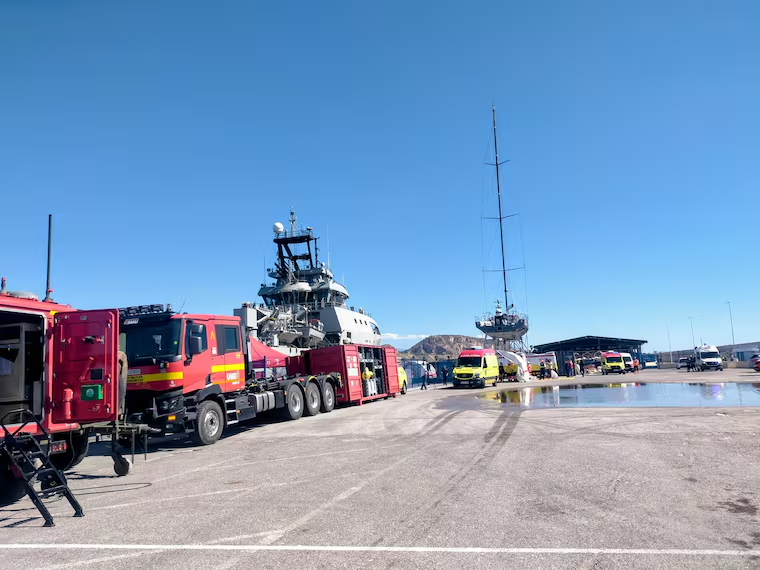
Alicante’s Port of Alicante was the focal point of Spain’s annual maritime security exercise, MARSEC 26, which simulated a complex emergency scenario involving a Navy frigate. The drill, which activated a series of coordinated responses from various emergency services, aimed to assess the readiness and collaboration of both military and civilian agencies in handling maritime crises.
Fire and Toxic Spill: A Challenging Scenario
This year’s MARSEC 26 scenario presented a multifaceted emergency: a fire aboard the fictional Navy frigate P62 *Cartagena*, compounded by a toxic cloud from a spill of aniline, a hazardous chemical. The situation escalated quickly as the ship’s captain suffered a stroke, leading to chaos onboard. Three sailors fell into the water, and seven others sustained injuries, some serious. The exercise required simultaneous rescue operations by sea, land, and air, showcasing the importance of effective coordination among various emergency services.
From early morning, Alicante transformed into a live-action training ground for maritime security. The drill provided a unique opportunity to observe how military and civilian services collaborate under pressure. The successful execution of the exercise demonstrated the critical nature of preparedness and teamwork in emergency response situations.
Alicante Takes Center Stage in International Maritime Security
MARSEC 26 not only served as a national drill but also marked the commencement of Spain’s presidency of the Mediterranean Coast Guard Functions Forum (MCGFF 2026). This international dimension attracted observers from countries including Peru, Cameroon, Japan, and Mauritania, alongside representatives from Mediterranean nations such as Italy, Tunisia, and France. For several hours, Alicante became a real-world laboratory for international cooperation in maritime security.
The exercise was presided over by Admiral Vicente Querol Gamboa and Naval Commander Rafael Torrecillas del Prado, emphasizing that maritime security is a result of extensive training and coordination. The drill involved a diverse array of participants, including the Navy’s Maritime Action Force, the Port Authority, Civil Guard, and healthcare services, highlighting the interconnected nature of maritime risk management.
Prevention: The Key to Effective Emergency Response
While the exercise showcased the deployment of vessels and specialized personnel, its core focus was on prevention. MARSEC 26 aimed to identify potential failures before they escalate into real emergencies, refine protocols, and enhance trust among agencies. In a world increasingly shaped by hybrid threats and environmental risks, proactive measures are essential for ensuring maritime safety.
The day underscored the importance of ongoing collaboration between institutions, moving beyond reactive responses to a culture of preparedness. The evaluation of response times, command clarity, and inter-agency communication highlighted the necessity of integrating capabilities as a strategic imperative.
Life-Saving Operations in Action
A pivotal moment during the exercise was the helicopter evacuation of a severely burned victim, led by emergency pilot Juanjo Regalado. He emphasized the critical nature of rapid response, stating, “If the injured person had to be transferred to the hospital in Alicante, we could save a life in two minutes.” The helicopter’s medical capabilities allow for swift action in various emergency scenarios, from maritime accidents to critical medical situations.
HD Korea Introduces New Eco-Friendly Technology for Ammonia Fuel Emission Reduction
Insights from the Commanding Officer
Corvette Captain Carlos Perdido Aramburu, commanding officer of the *Cartagena*, provided insights into the simulated emergency. He explained the unfolding situation, which involved a toxic spill and multiple injuries. The exercise aimed to prepare personnel for real-life incidents, emphasizing the need for readiness on board vessels, where emergencies can arise unexpectedly.
Alicante: A Strategic Maritime Hub
Alicante’s selection for the MARSEC 26 exercise was strategic, given its status as one of the busiest ports in the western Mediterranean. The port’s diverse activities make it an ideal setting for testing responses to complex maritime incidents. Exercises like MARSEC 26 not only enhance local capabilities but also reinforce Alicante’s position as a key player in international maritime security cooperation.
