
Nickel Ore Liquefaction Suspected in Devon Bay Capsize
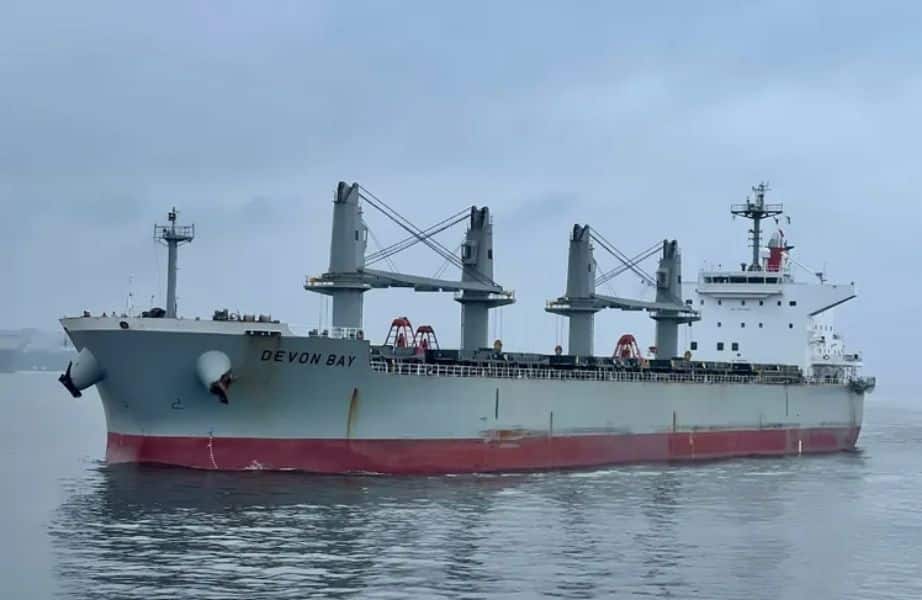
The ultramax bulk carrier Devon Bay capsized off the disputed Scarborough Shoal on January 22, with liquefaction of its nickel ore cargo emerging as the primary suspected cause. The vessel, built in 2013 and registered under the Singapore flag, was owned by K Line Pte Ltd, a subsidiary of Japan’s Kawasaki Kisen Kaisha. At the time of the incident, the Devon Bay was transporting approximately 55,000 tonnes of nickel ore from Gutalac in the southern Philippines to Yangjiang, China.
Philippine Coast Guard (PCG) Commandant Admiral Ronnie Gil Gavan reported that initial testimonies from the crew indicated cargo instability as a significant factor in the capsizing. “The initial statements of the crew suggest that the cargo – it was carrying around 55,000 tons of nickel ore and there was liquefaction. The moisture content of the cargo caused the shifting of the weight to the left side of the ship or the port side… and the weather was not good. There were big waves,” Gavan explained to local media. Although these statements provide a preliminary understanding of the incident, conclusive data is still pending.
Search and Rescue Efforts Underway
Of the 21 Filipino seafarers aboard the Devon Bay, 17 were successfully rescued through a joint operation involving Chinese and Philippine coast guard units. Tragically, two of the rescued crew members later succumbed to their injuries. Four individuals, including the ship’s master, Captain Elimar Jucal, remain unaccounted for. Admiral Gavan commended Captain Jucal for his bravery, noting that he stayed on board until the very end, demonstrating exceptional leadership during the crisis.
This incident has reignited concerns regarding the safety of transporting nickel ore, which is classified as a Group A cargo under the International Maritime Solid Bulk Cargoes (IMSBC) Code. When the moisture content of nickel ore exceeds the transportable moisture limit, it can behave like a liquid, leading to sudden and catastrophic shifts within the cargo holds. Such conditions leave crews with little to no time to react or abandon ship, significantly increasing the risk of disaster.
Tragic Capsizing of Singapore-Flagged Vessel Claims Lives in South China Sea
Historical Context of Nickel Ore Disasters
The Devon Bay incident is not an isolated case; it highlights a troubling trend in maritime safety concerning nickel ore shipments. Historically, many bulk carrier losses have been linked to this high-risk commodity, particularly shipments originating from the Philippines and Indonesia to China. Notable past disasters include the Nasco Diamond, Jian Fu Star, Hong Wei, Vinalines Queen, and Emerald Star. According to Intercargo’s latest Bulk Carrier Casualty Report, between 2015 and 2024, cargo liquefaction—especially of nickel ore and bauxite—was responsible for 55 out of 89 bulk carrier fatalities.
As investigations continue into the capsizing of the Devon Bay, the maritime industry remains vigilant about the dangers associated with transporting nickel ore. The ongoing scrutiny may lead to renewed calls for stricter regulations and safety measures to prevent future tragedies linked to this perilous cargo.
