Naval Architecture
-

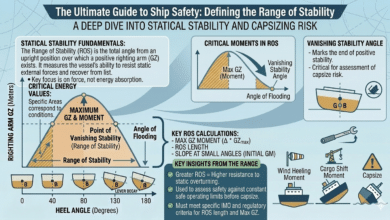
The Ultimate Guide to Ship Safety: Defining the Range of Stability
Imagine pushing down on the side of a small toy boat floating in a bathtub. As you push, the boat…
Read More » -
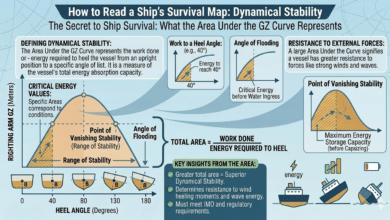
The Secret to Ship Survival: What the Area Under the GZ Curve Represents
Imagine a giant cargo ship sailing through a violent hurricane. The wind is howling. Massive waves are crashing into the…
Read More » -
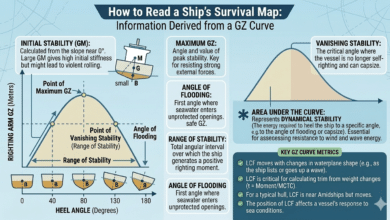
How to Read a Ship’s Survival Map: Information Derived from a GZ Curve
Imagine you are the captain of a massive cargo ship heading into a violent ocean storm. The wind is howling,…
Read More » -
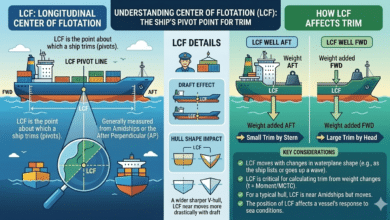
The Secret Pivot Point: Explaining the Center of Flotation (F)
Have you ever played on a seesaw at the park? If you sit on one end, the other end goes…
Read More » -
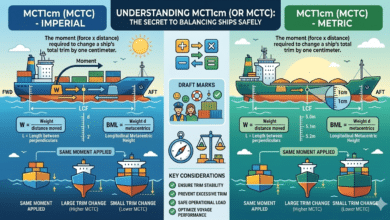
Mastering Ship Balance: What is the Moment to Change Trim one Centimeter (MCTC)?
When you stand on the deck of a colossal cargo ship, it is easy to focus on how the vessel…
Read More » -
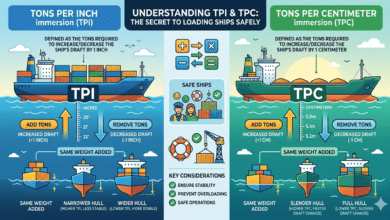
Understanding TPI and TPC: The Secret to Loading Ships Safely
Have you ever watched a giant crane carefully lower a massive, steel shipping container onto the deck of a cargo…
Read More » -
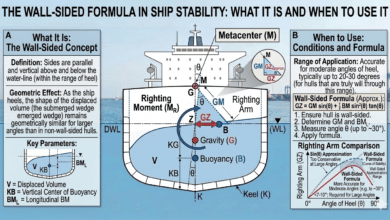
The Wall-Sided Formula in Ship Stability: What It Is and When to Use It
Have you ever wondered how we calculate a ship’s safety when ocean waves push it past a gentle tilt? In…
Read More » -
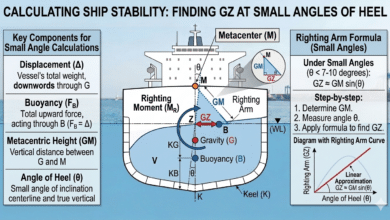
Calculating Ship Stability: How to Find the GZ at Small Angles of Heel
Have you ever wondered how we measure a ship’s safety when it just barely starts to lean? When a gentle…
Read More » -
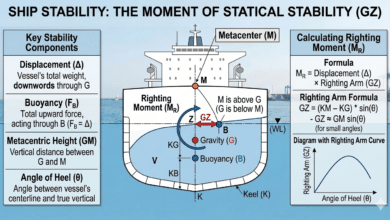
Understanding Ship Balance: What is the Moment of Statical Stability?
Have you ever watched a ship roll heavily to one side during a severe ocean storm and wondered how it…
Read More » -
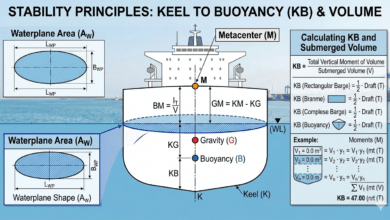
Understanding KB in Ship Stability: Box Vessels vs. Ship Shapes
Have you ever wondered how engineers know a massive steel ship will float safely? It all starts with understanding the…
Read More »