Naval Architecture
-
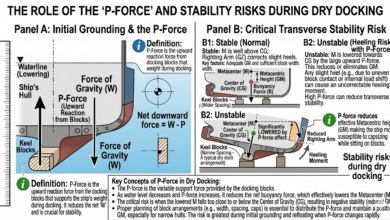
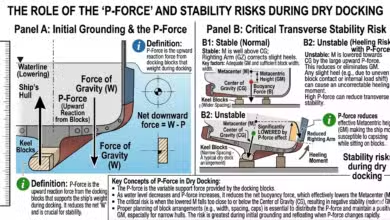
The Invisible Push: What is the P-Force in Dry Docking?
When a massive steel ship floats in the ocean, the water acts like a giant, soft cushion. It pushes up…
Read More » -
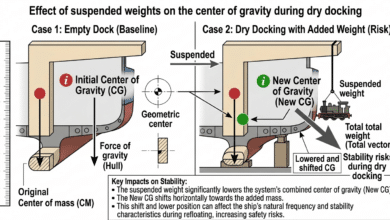
Balancing on a Knife’s Edge: Understanding Stability Risks During Dry Docking
Imagine taking a colossal, steel ocean liner entirely out of the water. It sounds impossible, but ships must do this…
Read More » -
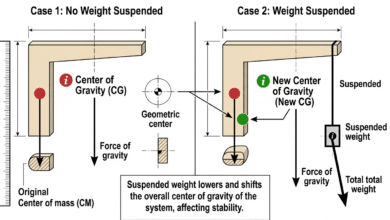
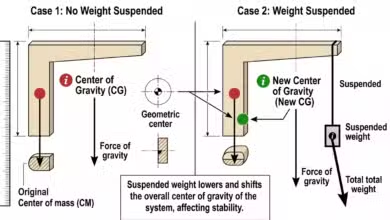
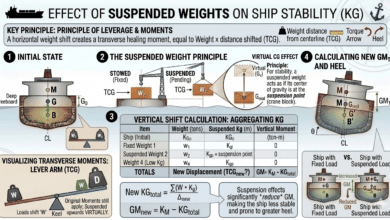
The Crane Danger: The Effect of Suspended Weights on the Center of Gravity
Imagine a ship using a massive, towering crane to lift a heavy steel box off the dock. As soon as…
Read More » -

The Crane Danger: The Effect of Suspended Weights on the Center of Gravity
Imagine a ship using a massive, towering crane to lift a heavy steel box off the dock. As soon as…
Read More » -
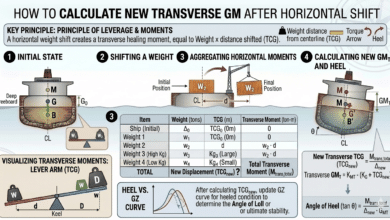
The Tipping Point: The Effect of Horizontal Shift of Weights on a Ship’s Equilibrium
Imagine carrying a heavy backpack on only one shoulder. Your body naturally leans to that side to keep from falling…
Read More » -
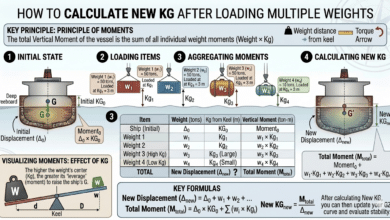
The Master Equation: How to Calculate the New KG After Loading Multiple Weights
Loading a massive cargo ship is exactly like packing a giant, floating moving van. Every single steel box you place…
Read More » -
The Elevator Rule: Understanding the Effect of Vertical Shift of Weights on GM
Moving a heavy box from the bottom of a ship to the top deck does not change the total weight…
Read More » -
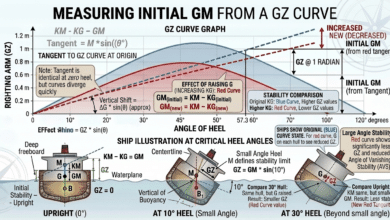
The Weight Game: How a Vertical Shift in G Affects the GZ Curve
Moving a single heavy shipping container straight up into the air can completely change a ship’s survival chances. On a…
Read More » -
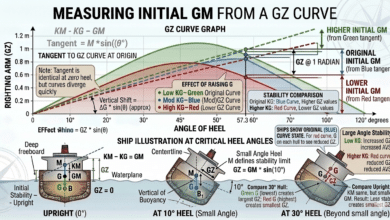
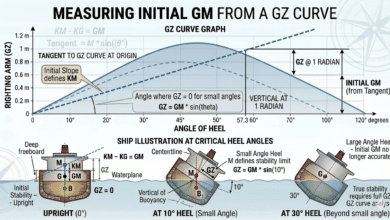
Reading the Starting Line: Finding Initial GM on a GZ Curve
You do not have to wait for a massive storm to know if a ship is safe. The moment a…
Read More » -
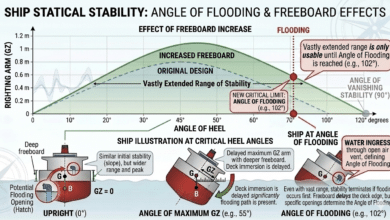
When the Ocean Pours In: What is the Angle of Flooding?
Every steel ship has holes in it. Massive diesel engines need massive amounts of air to breathe. The crew needs…
Read More »