
Why Are Passenger Ships Designed to be Tender? A Simple Guide to Ship Stability
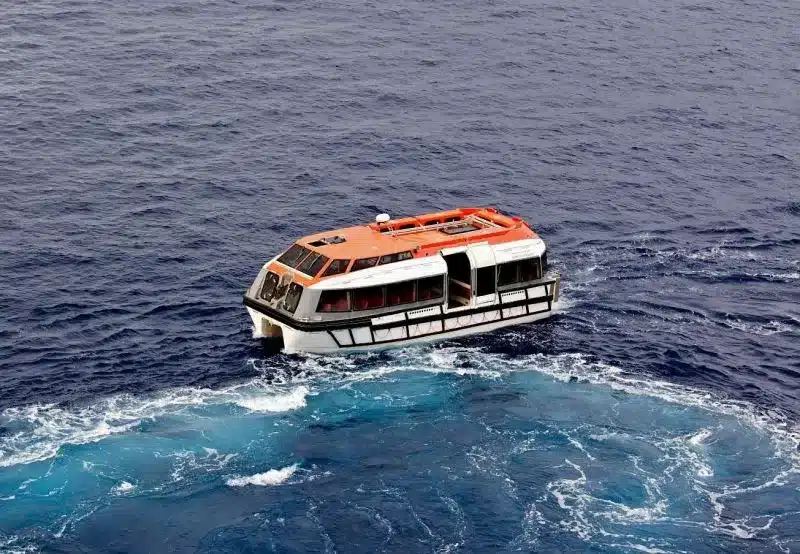
Imagine sitting down to enjoy a multi-course dinner on a luxurious cruise ship in the middle of the ocean. The absolute last thing you want is for your glass of wine or your plate of food to suddenly go sliding across the table. When experts design passenger vessels, their primary goal goes far beyond just keeping the massive steel structure afloat; they must ensure the ride is incredibly smooth. To achieve this, luxury cruise liners and ocean ferries are deliberately built with what the maritime industry calls “tender” ship characteristics.
Unlike industrial cargo vessels that prioritize raw lifting capacity, a cruise ship prioritizes human comfort. But what exactly does it mean for a floating hotel to be tender, and why is this specific physics choice so vital for passenger vessels? The answer lies in the careful, calculated tug-of-war between gravity and buoyancy. Let’s explore the fascinating science of ship stability and discover why a softer, slower roll is the ultimate secret to a perfect, relaxing ocean vacation.
The Secret to a Comfortable, Seasickness-Free Voyage
When maritime professionals describe a ship as being “tender,” they are talking about a vessel that has a relatively small, but highly calculated, Metacentric Height (GM). In simple terms, this means the ship’s Center of Gravity—the mathematical point where all of its downward weight is focused—sits fairly high up in the hull. Because this heavy weight is located higher up, the ship does not fight back aggressively when a large wave pushes against its side. Instead of violently snapping back to a perfectly vertical position, a tender ship yields to the water. It leans over slowly, pauses gently at the edge of the roll, and takes its time lazily swinging back to the center.
This long, slow rolling motion is the absolute foundation of passenger comfort. You can think of it like a playground swing with very long chains; the motion is sweeping and graceful. If a ship were designed to be the opposite—a “stiff” ship with all its weight packed at the very bottom—it would snap-roll back and forth in just a matter of seconds. That rapid, jerky, and violent motion is physically exhausting. It is the exact type of movement that triggers severe seasickness, makes walking down the hallway dangerous, and sends loose items flying across the room. By intentionally embracing a tender passenger ship design, engineers guarantee a smooth, predictable motion that the human inner ear can easily adapt to, ensuring your time by the pool remains deeply relaxing.
Building Upward: Designing for Luxury and Space
The very nature of what makes a modern cruise ship so appealing naturally contributes to its tender design. Think about the physical profile of a massive passenger liner. Unlike a flat, heavy cargo barge, a cruise ship looks like a towering floating resort. It features massive superstructures, often fifteen to twenty decks high, packed with luxury cabins, sweeping balconies, expansive dining rooms, water parks, and glass elevators. All of this incredible infrastructure requires building upward into the sky.
As naval architects stack these expansive passenger decks higher and higher above the waterline, the ship’s overall Center of Gravity naturally rises with them. It is physically impossible to build a floating mega-resort without pushing the weight distribution higher than you would on a ship carrying heavy iron ore deep in its belly. To manage this safely, designers often use lighter materials, like aluminum, for the highest decks. Even so, this tall, grand architecture inherently creates a tender ship. Ultimately, it is a brilliant engineering compromise. By raising the center of gravity, designers can offer thousands of guests breathtaking, elevated ocean views and massive, open entertainment spaces, all while naturally achieving that slow, comfortable rolling motion that passengers expect.
Modern Technology Keeps Tender Ships Safe
Hearing that a ship is naturally “top-heavy” or tender might sound slightly alarming to a nervous traveler. However, a tender ship is incredibly safe. Being tender simply means the ship has a softer initial righting energy; it absolutely does not mean it lacks stability. To ensure these floating cities remain completely safe in rough ocean weather, designers rely on a combination of strict mathematics, wide hull designs, and cutting-edge maritime technology.
First, the underwater hull of a passenger ship is designed to be exceptionally wide, providing a massive base of natural buoyancy that prevents the ship from ever rolling too far over. Second, modern cruise ships are equipped with active fin stabilizers. These are highly advanced, computer-controlled underwater wings that extend from the side of the hull. As waves try to roll the tender ship, these fins instantly adjust their angle, acting like airplane wings in the water to drastically reduce the rolling motion before the passengers even feel it. Finally, the design and daily operation of these vessels are governed by incredibly strict global safety codes. Respected regulatory bodies like the International Maritime Organization (IMO) and the United States Coast Guard (USCG) enforce rigorous stability criteria, ensuring that every tender passenger ship has more than enough reserve stability to safely navigate the world’s oceans without compromising guest comfort.
Q&A: Understanding Tender Ship Dynamics
A tender ship has a higher center of gravity, causing it to roll slowly, smoothly, and gently over the waves. A stiff ship has a very low center of gravity, causing it to aggressively and violently snap back to an upright position when pushed by a wave, which is highly uncomfortable for anyone onboard.
While no ship can prevent seasickness 100% in a massive ocean storm, a tender ship significantly reduces the risk. Seasickness is largely triggered by rapid, unpredictable accelerations and jerky movements. The slow, predictable, and gentle roll of a tender ship is much easier for the human brain and inner ear to process comfortably.
No. While they have a smaller initial righting force for the sake of passenger comfort, they are mathematically designed with massive amounts of “reserve buoyancy.” Because their hulls are very wide and their upper decks are fully enclosed, they possess incredible stopping power at larger angles of tilt, keeping them entirely safe from capsizing.
Because passenger ships have massive, tall sides (acting much like a giant sail), strong crosswinds can push them into a temporary, steady lean, known as a heel. To counteract this and keep the swimming pools level, the crew uses automated internal pumping systems to quickly shift heavy ballast water to the windward side, naturally balancing the ship back to a perfectly upright stance.
