
China’s Shipbuilding Boom: Reactivated Yards Surge
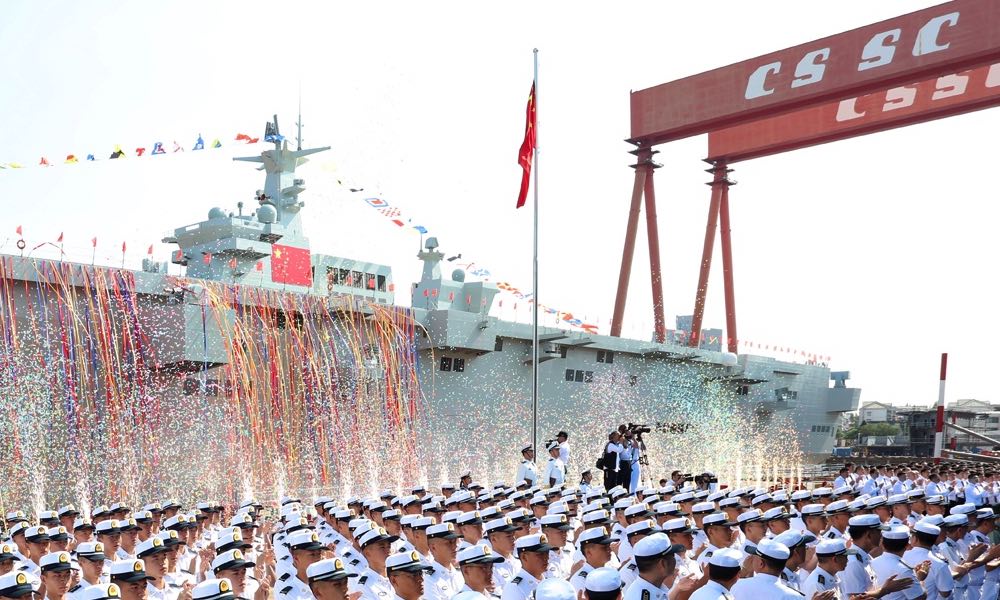
China’s shipbuilding industry is experiencing a remarkable resurgence, marked by the reactivation of dormant shipyards and significant expansions among established shipbuilding groups. According to the latest annual shipping markets review by BRS Group, this surge represents the most substantial capacity expansion in years. By the end of 2025, China’s orderbook market share is projected to reach 70.9%, a notable increase from 66.7% in 2024 and 57.3% in 2023.
Revitalization of Shipyards and Workforce Growth
China’s shipbuilding sector accounted for an impressive 72.3% of global new orders and 56.6% of global deliveries last year. The total shipbuilding output rose by 10.5%, climbing from 48 million deadweight tons (dwt) to 53 million dwt. A significant contributor to this growth is the state-backed China State Shipbuilding Corporation (CSSC), which now employs over 310,000 workers.
At least seven previously inactive shipyards have been reactivated, with an additional dozen existing facilities expanding their capacities. Notably, China Merchants Shipbuilding Industry Group (CMI) is leading this revitalization. CMI has taken over the former Qingdao Yangfan Shipyard, now known as CMI Qingdao Shipyard, focusing on large merchant ship newbuildings across various segments, including bulk carriers, tankers, and containers. The company has also reactivated the Nanjing Dongze Shipyard, which will specialize in constructing large stainless-steel tankers, and the Qingshan Shipyard in Wuhan for small feeder containerships.
Other notable reactivations include Xiangshui Wanlong’s Sanjia Heavy Industry site, which is under construction and will feature new berths for 80,000 dwt and 50,000 dwt vessels, along with large slipways and gantry cranes. Ningbo Penghong Heavy Industry has revived the former Beilun Lantian Shipbuilding yard, now producing feeder container vessels and chemical tankers. Jiangxi Xin Xiangsheng has also reactivated its facility, securing orders for chemical tankers from a Singaporean owner.
Expansions and International Ventures
The expansions at established shipyards are equally noteworthy. CSSC Hudong-Zhonghua has closed its downtown Shanghai facility and opened a new yard on Changxing Island, effectively doubling its annual LNG carrier delivery capacity. Guoyu Shipyard, which was reactivated in 2024, has acquired two additional shipyards in Zhoushan, expected to reopen by late 2026. Yangzijiang is constructing a new facility, Yangzi Hongyuan Shipbuilding, set to be operational by 2026, with a drydock capable of handling 800,000 dwt per year.
DVIDS – News – VMFA-251 reactivates as Marine Corps’ first East Coast-based F-35…
Several traditionally domestic-focused yards are also making strides into international markets. Shandong Port Marine Equipment has secured orders for multipurpose vessels, while Anhui Port Marine Equipment has landed livestock carrier orders. Notably, Shandong Jining New Energy has won an order from CMA CGM for a pure electric containership and has exported components for bulk carriers to be assembled in Tanzania.
The BRS data illustrates a Chinese shipbuilding industry that is not only consolidating its dominance but actively expanding it across various vessel types and market tiers. This growth is expected to have significant implications for global newbuilding supply in the coming years. Unlike the previous boom in the early 2000s, this expansion is centered on reactivating existing facilities rather than establishing new ones, reflecting a more consolidated sector.
