
U.S. Navy’s $65.8 Billion Shipbuilding Plan Boosts South Korea
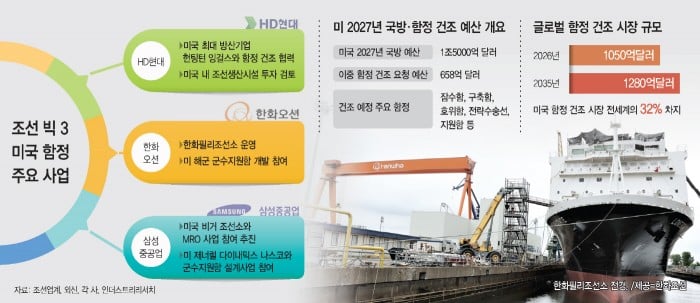
The U.S. Navy’s ambitious shipbuilding initiative is set to invigorate South Korea’s shipbuilding sector, creating new opportunities for collaboration and contracts. The Navy has proposed a substantial $65.8 billion allocation for ship construction in its fiscal 2027 defense budget, part of a broader $1.5 trillion defense spending strategy. This funding request is among the largest since the early 1960s, signaling a significant shift in naval capabilities.
Major Investments and Strategic Collaborations
The proposed shipbuilding plan aims to construct approximately 41 vessels, including 18 combat ships and 16 non-combat ships. A notable focus of this initiative is on logistics and support vessels, such as transport ships, fleet oilers, and supply ships. Industry analysts believe that South Korean shipbuilders stand to gain significantly, particularly in the non-combat segment, where partnerships with U.S. firms are more viable compared to core combat ship production.
Leading South Korean shipbuilders, including HD Hyundai, Hanwha Ocean, and Samsung Heavy Industries, have already forged partnerships with the U.S. Navy through maintenance, repair, and overhaul (MRO) projects, as well as design collaborations. Hanwha Ocean is positioned favorably, having established a local production base and engaged in the conceptual design of the Navy’s next-generation logistics support ship (NGLS), which could pave the way for future contracts.
HD Hyundai is also expected to enhance its involvement through collaboration with Huntington Ingalls Industries, particularly as the U.S. Navy transitions to ship designs based on Ingalls Shipbuilding. Meanwhile, Samsung Heavy Industries is working with General Dynamics NASSCO on logistics support ship design and is aiming to expand its MRO projects within U.S. shipyards.
Future Prospects for South Korean Shipbuilders
Experts highlight that U.S. policymakers are increasingly recognizing the importance of utilizing allied shipyards to boost productivity and technological capabilities. If the proposed budget is approved, South Korean shipbuilders, equipped with both domestic production capabilities and extensive global experience, are expected to be well-positioned to capitalize on this significant investment.
The anticipated growth in the U.S. Navy’s shipbuilding program not only promises to enhance naval capabilities but also strengthens the economic ties between the U.S. and South Korea. As the shipbuilding landscape evolves, the collaboration between these nations could lead to a new era of maritime innovation and defense readiness.
