
Ancient Cannon Discovered in Hull Construction Site
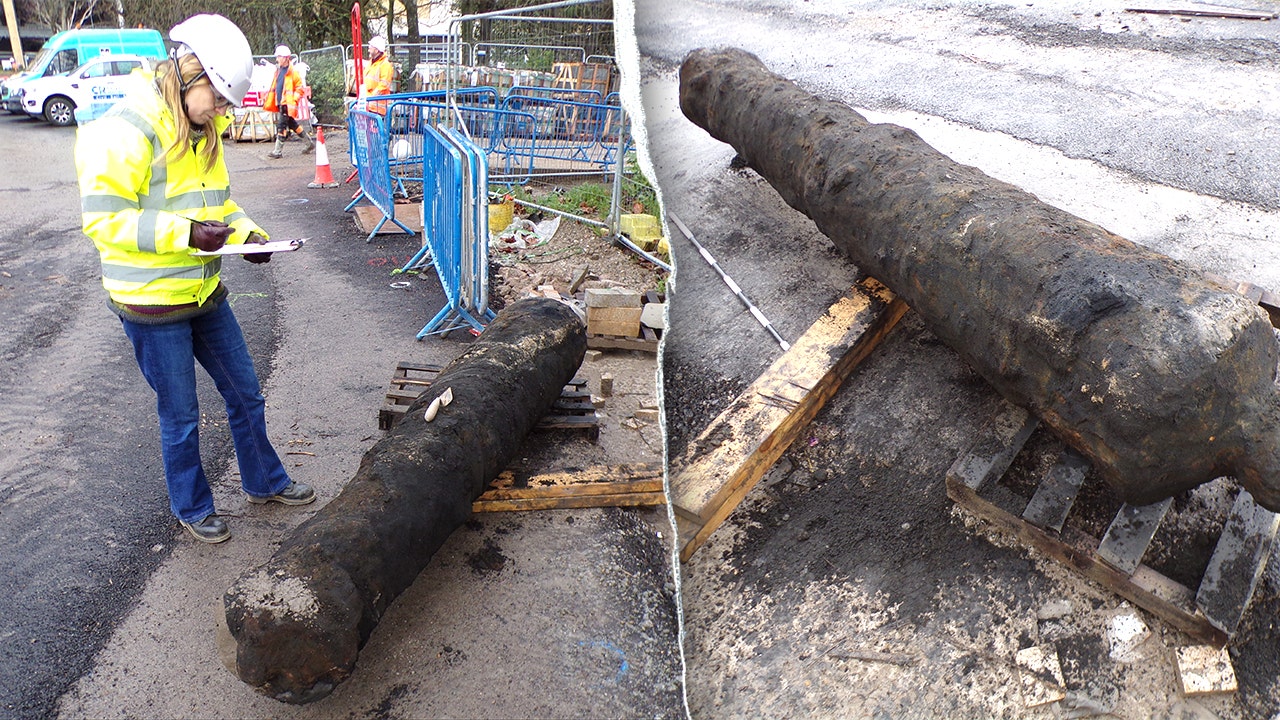
In a remarkable archaeological find, construction workers in Kingston upon Hull, East Yorkshire, have unearthed a 300-year-old cannon during routine excavation work. The discovery was confirmed by Hull City Council, which stated that the cast-iron cannon likely dates back to the late 17th or early 18th century. Weighing over a ton and measuring nearly nine feet in length, this artifact has intrigued archaeologists and historians alike.
Unexpected Discovery Sparks Archaeological Interest
The cannon was discovered while workers were engaged in a project in Kingston upon Hull. Upon its unearthing, archaeologists from Humber Field Archaeology, a unit of Hull City Council, quickly assessed the find. Initial examinations revealed that the cannon had been decommissioned, with its nozzle intentionally capped. Experts believe it may have been repurposed as a mooring post, a common practice during the late 19th and early 20th centuries, before being discarded into the dock area prior to its infill in the 1930s.
Peter Connelly, archaeology manager for Humber Field Archaeology, expressed surprise at the find, stating that the contractors were not expecting to uncover a cannon. He noted that the area being excavated was previously identified as dock backfill, leading archaeologists to anticipate typical 20th-century refuse rather than historical artifacts. Connelly remarked, “This discovery just goes to show that people will deposit anything in a conveniently large hole in the ground when it is being backfilled.”
While finds of this nature are not entirely uncommon, Connelly emphasized that this cannon is a rare discovery, marking only the third of its kind in the last 30 years. Previous excavations in Hull have yielded other significant artifacts, including a cannon from the era of Henry VIII and a fragment from just before the English Civil War. The recent find adds to the rich tapestry of Hull’s maritime history.
Future Research and Analysis Planned
As archaeologists continue to study the cannon, they aim to determine its origins, including whether it was manufactured in Hull, where local cannon makers operated in the late 18th century. Connelly indicated that further analysis will focus on pinpointing the exact date of casting and identifying the maker of the cannon. This research will contribute to a deeper understanding of the historical context surrounding the artifact.
The cannon’s discovery has not only shed light on Hull’s past but also highlights the potential for unexpected archaeological finds during construction projects. Connelly noted that while the team anticipated finding everyday items, such as a late 19th-century glass decanter, the cannon’s presence underscores the historical significance of the area. As the investigation progresses, the cannon will be carefully preserved and studied, ensuring that its story continues to be told for generations to come.
