
INS Taragiri: India’s Advanced Warship Commissioned
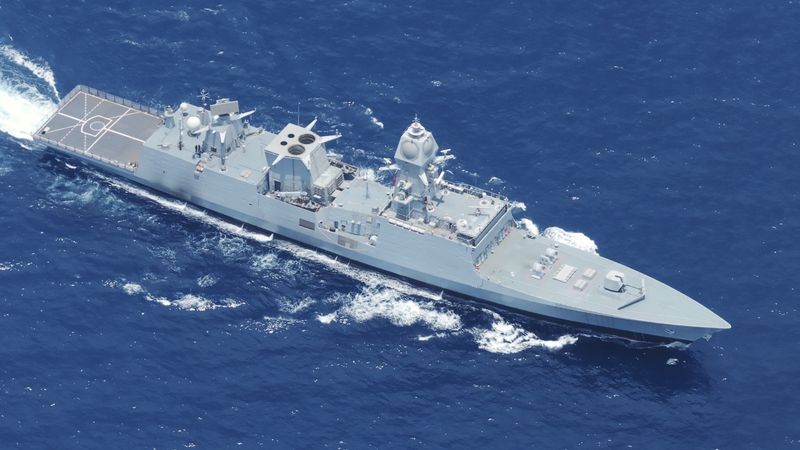
The Indian Navy has officially commissioned the INS Taragiri, the fourth vessel in the Nilgiri class of stealth frigates, in a ceremony held in Visakhapatnam. Defence Minister Rajnath Singh attended the event, marking a significant milestone in India’s naval capabilities. Built by Mazagon Dock Shipbuilders Limited, the INS Taragiri displaces 6,670 tonnes and incorporates cutting-edge technology designed to enhance shipbuilding efficiency and combat readiness.
Revolutionizing Naval Warfare with Integrated Construction
The INS Taragiri represents a leap forward in indigenous ship design, utilizing advanced stealth technology to minimize its radar signature. This enhancement provides the vessel with a strategic advantage in contested environments. The ship is equipped with a formidable array of weaponry, including supersonic surface-to-surface missiles, medium-range surface-to-air missiles, and a combination of close-in weapon systems. Additionally, it features anti-submarine warfare capabilities, making it a versatile asset for the Indian Navy.
Over the past decade, the Indian Navy has accelerated its warship construction efforts, adopting modern technologies and construction techniques. The introduction of ‘integrated construction’ has transformed the shipbuilding process. This method allows various components of the ship, such as the hull and internal systems, to be designed and manufactured in separate blocks. These blocks are then seamlessly aligned to create the complete structure of the ship, significantly reducing construction time.
In recent years, the Ministry of Defence has invested in new infrastructure at shipyards, established efficient supply lines, and implemented artificial intelligence to optimize the sequencing of warship assembly. The Nilgiri class frigates are the first to utilize this innovative construction method, with the first three ships completed in under eight years. Remarkably, the INS Taragiri was built in less than six and a half years, showcasing the effectiveness of these advancements.
Streamlined Processes and Future Prospects
The design teams at the Navy’s Warship Design Bureau in New Delhi have developed strategies to maximize equipment installation before the ship’s launch. This approach allows for critical testing of the vessel’s capabilities at sea while minimizing the time spent in dry dock. Each construction block, weighing approximately 250 tonnes, is meticulously designed to facilitate the integration of essential systems like cabling and piping during assembly.
As the Indian Navy continues to refine its shipbuilding processes, timelines for future projects are expected to shorten even further. The ongoing construction of the Nilgiri class frigates exemplifies this trend, with each vessel benefiting from lessons learned in previous builds. The INS Taragiri stands as a testament to India’s growing naval prowess and commitment to enhancing its maritime defense capabilities.
