
Alicante Hosts Major Maritime Security Drill
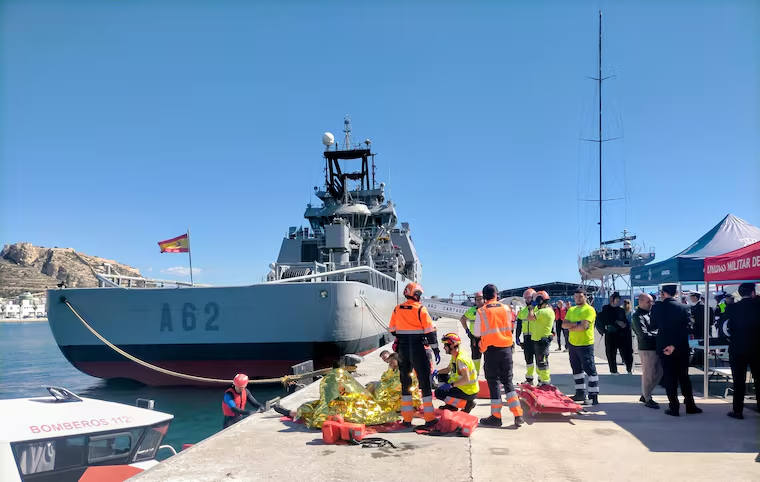
Alicante’s Port was the focal point of Spain’s annual maritime security exercise, MARSEC 26, which simulated a complex emergency scenario involving a Navy frigate. The drill, designed to test the coordination of emergency services across the country, involved multiple agencies responding to a simulated fire and toxic spill on board the fictional vessel P62 Cartagena. The exercise showcased the critical importance of preparedness and collaboration in maritime safety.
Fire and Toxic Spill: A Complex Scenario
This year’s MARSEC 26 drill presented a challenging scenario: a fire on the frigate accompanied by a toxic cloud resulting from a spill of aniline, a hazardous substance. The situation escalated quickly, with the ship’s captain suffering a stroke and multiple injuries reported among the crew. Three sailors fell into the water, while seven others sustained serious injuries. The exercise required simultaneous rescue operations by sea, land, and air, demonstrating the effectiveness of coordinated emergency responses.
From early morning, Alicante transformed into a live-action training ground for emergency services, highlighting the importance of real-time collaboration between military and civilian agencies. The drill involved various organizations, including the Navy’s Maritime Action Force, the Port Authority, Maritime Rescue, Civil Guard, and healthcare services, all working together to manage the crisis effectively.
International Attention on Alicante
The MARSEC 26 exercise coincided with Spain’s presidency of the Mediterranean Coast Guard Functions Forum (MCGFF) for 2026, attracting international observers from countries such as Peru, Cameroon, Japan, and Mauritania. This event positioned Alicante as a key player in maritime security cooperation, showcasing its strategic importance in the Mediterranean region.
Admiral Vicente Querol Gamboa, who presided over the opening of the exercise, emphasized that maritime security is a result of thorough training and coordination. The drill not only tested the response capabilities of various agencies but also aimed to enhance protocols and foster trust among participants. The diverse involvement of agencies underscored the necessity of a unified approach to managing maritime risks.
Prevention: The Key Focus
While the exercise showcased the deployment of vessels and emergency equipment, its primary goal was prevention. MARSEC 26 aimed to identify potential failures before they escalated into real emergencies, reinforcing the importance of proactive measures in maritime safety. In an era marked by hybrid threats and environmental risks, anticipation is crucial for effective security management.
The drill highlighted the ongoing commitment to improving response times, communication, and command clarity among agencies. This collaborative culture is essential for ensuring that all parties are prepared to handle maritime incidents efficiently.
Life-Saving Operations in Action
A pivotal moment during the exercise was the helicopter evacuation of a severely burned victim, led by emergency pilot Juanjo Regalado. He noted the critical importance of rapid response, stating, “If the injured person had to be transferred to the hospital in Alicante, we could save a life in two minutes.” The helicopter’s medical capabilities were showcased, demonstrating its versatility in responding to various emergencies.
Maritime Security Drill Tests Emergency Response in Alicante
Corvette Captain Carlos Perdido Aramburu, commanding officer of the P62 Cartagena, provided insights into the simulated emergency, explaining the realistic nature of such drills. He stressed the necessity for ships to be prepared for a range of incidents, from fires to toxic spills, and highlighted the importance of telemedicine capabilities for remote medical support.
Alicante: A Strategic Maritime Hub
Alicante’s selection as the drill’s location was strategic, given its status as one of the busiest ports in the western Mediterranean. The port’s diverse activities make it an ideal environment for testing emergency response protocols. Exercises like MARSEC 26 not only enhance local preparedness but also strengthen Alicante’s image as a center for international maritime cooperation, addressing shared security priorities across the Mediterranean.
