
U.S. Navy Faces Urgent Shipbuilding Crisis
Jack Buckby, a defense researcher and national security analyst based in New York, has highlighted a critical crisis within the U.S. Navy’s shipbuilding industry. As of March 2026, an alarming 82% of ships currently under construction are behind schedule, a situation worsened by the early retirement of the Littoral Combat Ship (LCS) and the costly failure of the Zumwalt-class destroyer program, which has incurred losses of $24 billion. Buckby warns that without addressing the underlying issues of design immaturity and diminishing shipyard capacity, the U.S. risks losing its competitive edge in the Indo-Pacific region.
The U.S. Navy Must Fix Its Shipbuilding Industry
The U.S. Navy is grappling with a shipbuilding crisis that threatens its ability to expand its fleet in response to emerging global threats. Despite increased funding for naval construction, many programs are either over budget or have been canceled, leading to stagnation in the number of operational ships. Government watchdogs have consistently reported that shipbuilding initiatives are plagued by cost overruns and delays, with no immediate solutions in sight. Currently, approximately 82% of ships under construction are running behind schedule.
This crisis is particularly pressing as China has emerged as a formidable maritime power, boasting the world’s largest navy by ship count. China’s shipbuilding capabilities allow it to produce warships at a pace that far exceeds that of the United States. This shift in naval power dynamics raises critical questions for U.S. planners and policymakers: Can the U.S. realistically rebuild its fleet while its shipbuilding system struggles to deliver new vessels on time?
A Shipbuilding Crisis
Several structural issues contribute to these challenges. The U.S. shipbuilding sector has contracted significantly since the Cold War, leaving only a handful of specialized shipyards capable of constructing complex naval vessels. Additionally, the Navy often initiates construction before designs are fully matured, increasing the likelihood of major changes mid-construction, which in turn drives up costs and delays. Consequently, the time required to build warships is increasing, while the Navy simultaneously retires aging vessels.
U.S. Navy Programs Going Off the Rails
Several high-profile naval programs exemplify the issues plaguing the U.S. shipbuilding industry. The Littoral Combat Ship (LCS) program, initially intended to produce affordable and modular vessels for near-shore operations, has faced mechanical failures and cost overruns, leading to the early retirement of some ships that cost hundreds of millions to build.
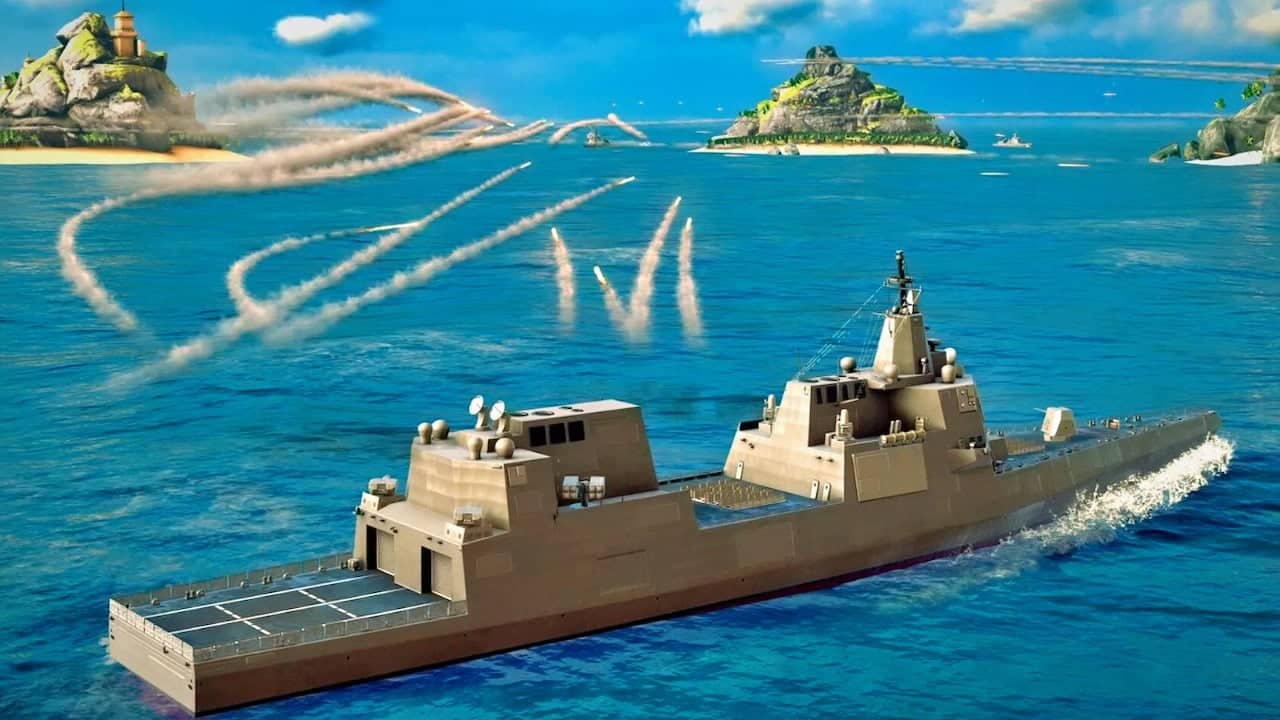
Similarly, the Zumwalt-class destroyer program, which was originally planned to include 32 advanced stealth destroyers, has been drastically reduced to just three ships due to spiraling costs. Each vessel has cost approximately $7-8 billion, with operational challenges stemming from expensive weapon systems that require costly ammunition.
More recently, the Constellation-class frigate program has encountered its own set of difficulties, with design changes and delays prompting the Navy to reevaluate the initiative. Collectively, these programs have consumed tens of billions of dollars while delivering far fewer ships than originally intended.
Baltic Sea Incident Raises Concerns Over Underwater Infrastructure
China Raises the Stakes
The U.S. Navy’s shipbuilding challenges are particularly alarming in light of China’s rapid maritime expansion. China now operates the largest navy in the world by ship count, and its shipbuilding industry has become a dominant force in global maritime manufacturing. Chinese shipyards produce a greater number of vessels than their American counterparts and benefit from a robust commercial shipbuilding sector that supports naval production.
In a prolonged conflict, especially in the Indo-Pacific, the ability to quickly build and repair ships could prove decisive. While the U.S. may currently maintain advantages in areas such as nuclear submarines and carrier aviation, a shrinking fleet could hinder its capacity to sustain a global naval presence. Addressing these pressing issues is imperative for the U.S. Navy’s future.
About the Author: Jack Buckby
Jack Buckby is a British researcher and analyst specializing in defense and national security, based in New York. His work focuses on military capability, procurement, and strategic competition, producing and editing analysis for policy and defense audiences. He has extensive editorial experience, with a career output spanning over 1,000 articles at 19FortyFive and National Security Journal, and has previously authored books and papers on extremism and deradicalization.
